There is no difference between the Running of the Bulls and the San Fermin Festival. The international, English name of the festival is “Running of the Bulls.” The official Spanish name is Sanfermin (all one word). We refer to it here as San Fermin Festival for clarity.
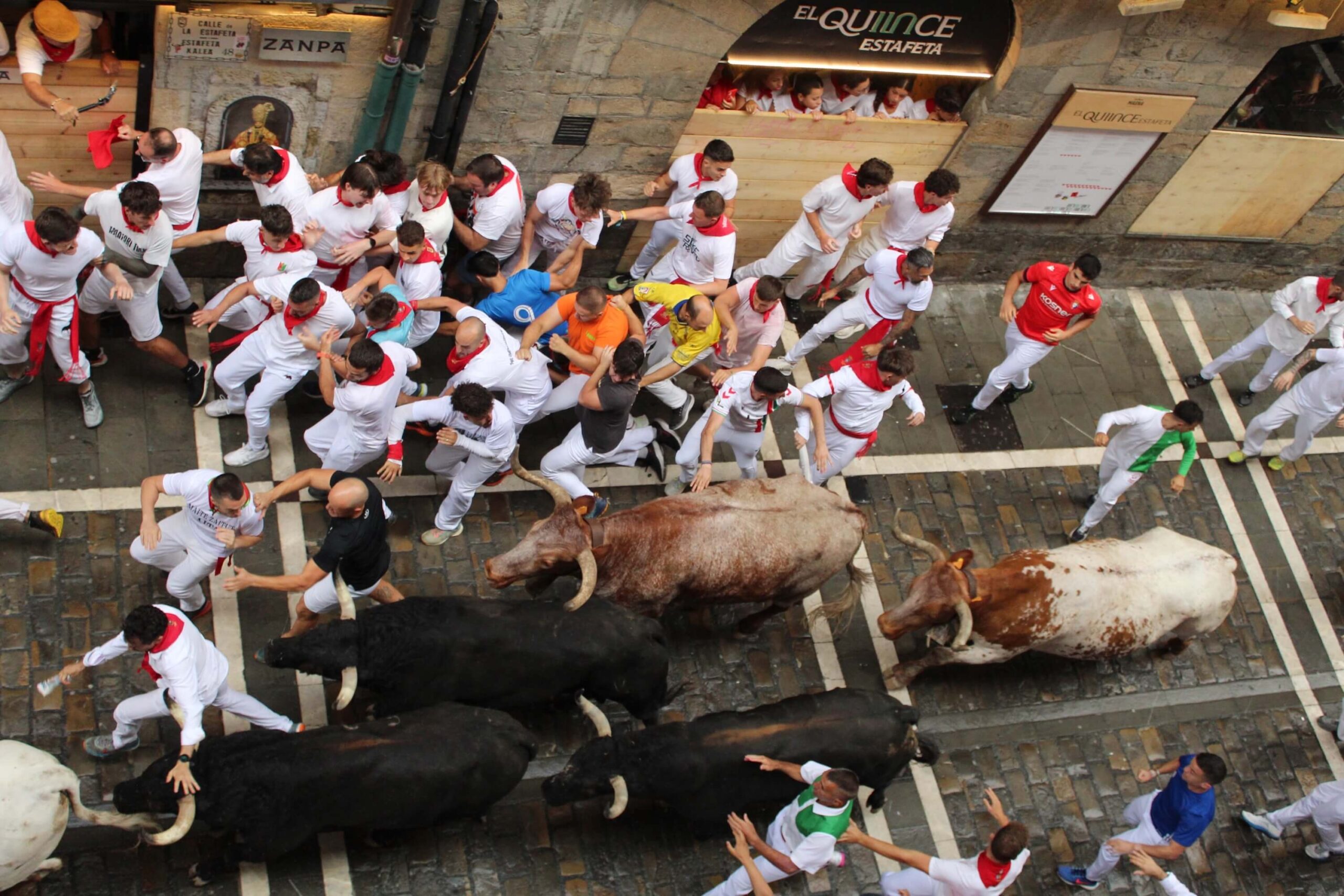
The actual, physical running of the bulls on the streets starts on the second day of the San Fermin Festival. The bulls run eight days in a row, from July 7th to July 14th.
The first day of the festival is Chupinazo – the opening ceremonies, so no bulls will run on that day, but you may be running from your friends trying to soak you in sangria.
The fiestas of San Fermin are celebrated in Iruña/Pamplona, in the region of Navarra. They have become internationally known because of the running of the bulls, where the bulls are led through the streets of the old quarter as far as the bull ring by runners.
The fiestas are celebrated in honor of San Fermin, patron saint of Navarra, although the religious aspect would seem to have taken on a secondary role over the last number of years. Nowadays, the fiestas are seen as a mass gathering of people from all corners of the world and where the partying, the fun, and the joy of it all are the primary ingredients.
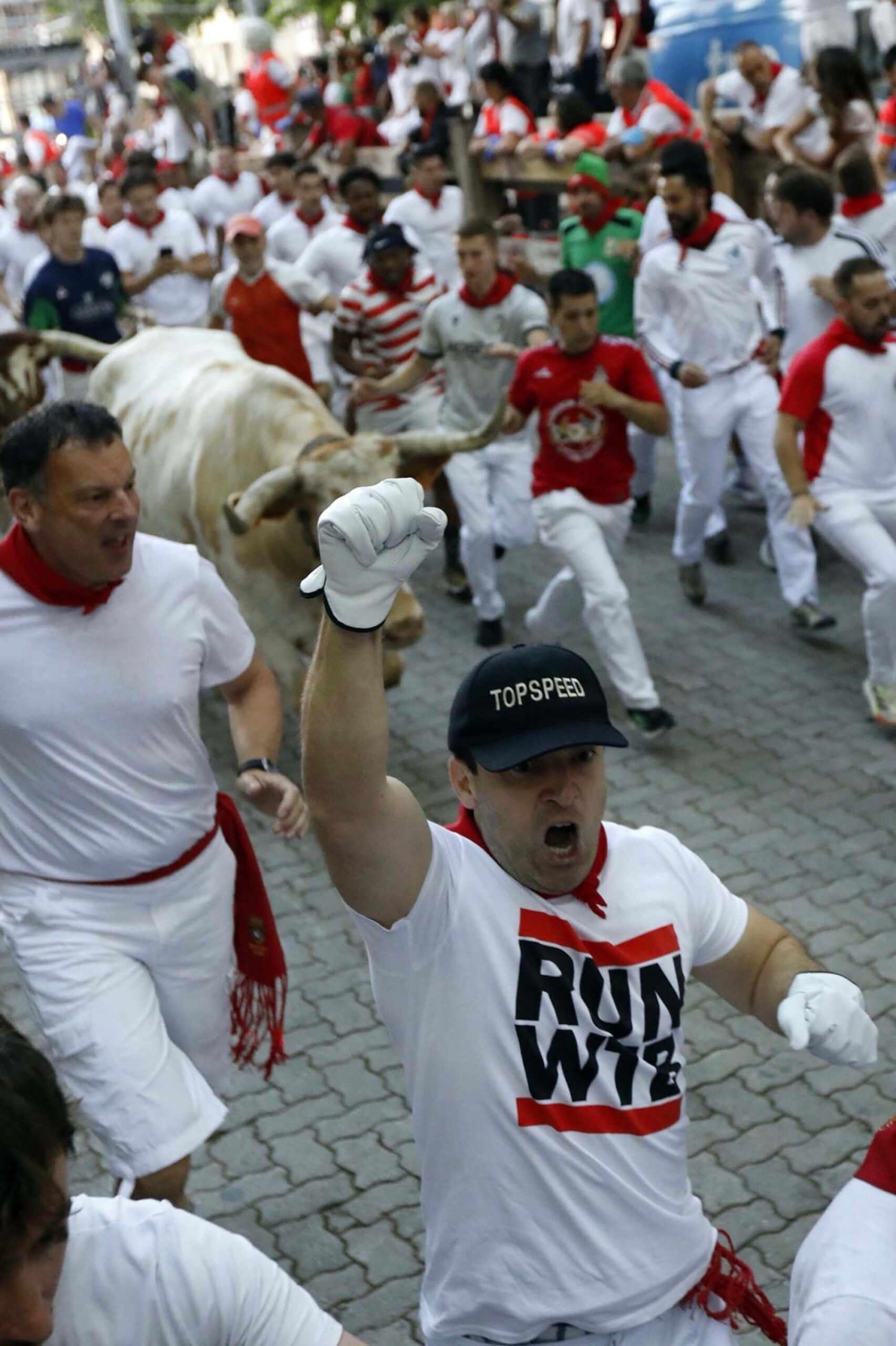
Yes, we help you accomplish the incredible feat of running with the bulls in several key ways.
There is no formal registration process for the run itself, but participation is dependent on being at the correct meeting location at the correct time. On the morning you choose to run, a dedicated Bucket List Events guide will personally escort you from the hotel to the official meeting area, ensuring you’re positioned properly and confidently for the experience.
Additionally, all overnight packages include a guided walking tour of the bull run course. During this experience, our expert guides lead you from the starting point to the finish, sharing the history of the event, the mechanics of the run, strategic tips, and helpful insights so you can fully understand what to expect before participating.
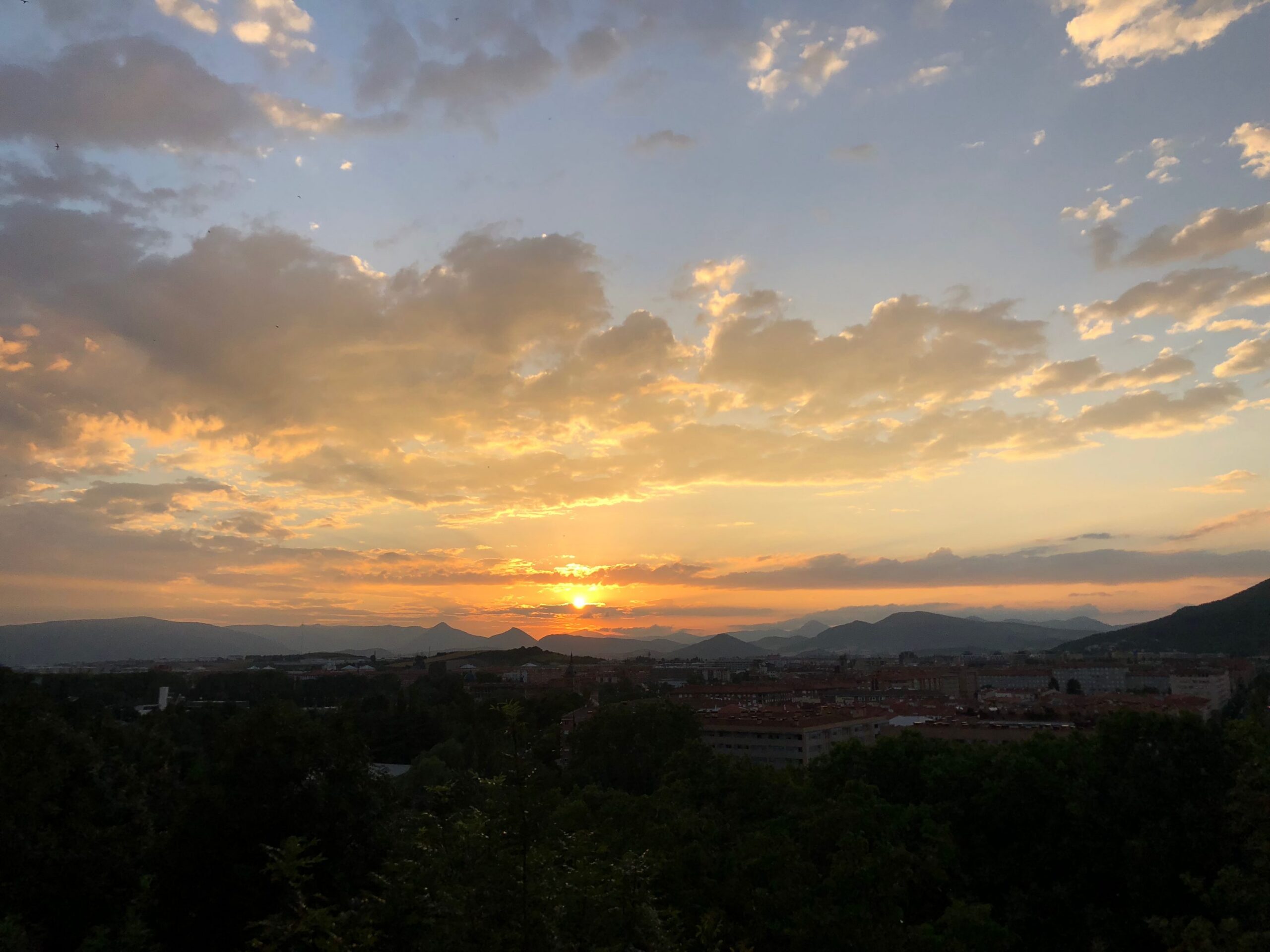
Pamplona is about 50 miles from the Pyrenees Mountains and the Spanish-French border and around 250 miles north of Madrid. Pamplona has an airport with daily flights from Madrid, Barcelona, Frankfurt and Lisbon. Train travel from Barcelona or Madrid and buses from San Sebastian are also very convenient to arrive in Pamplona.
We have put together a full guide on how to travel to Pamplona HERE
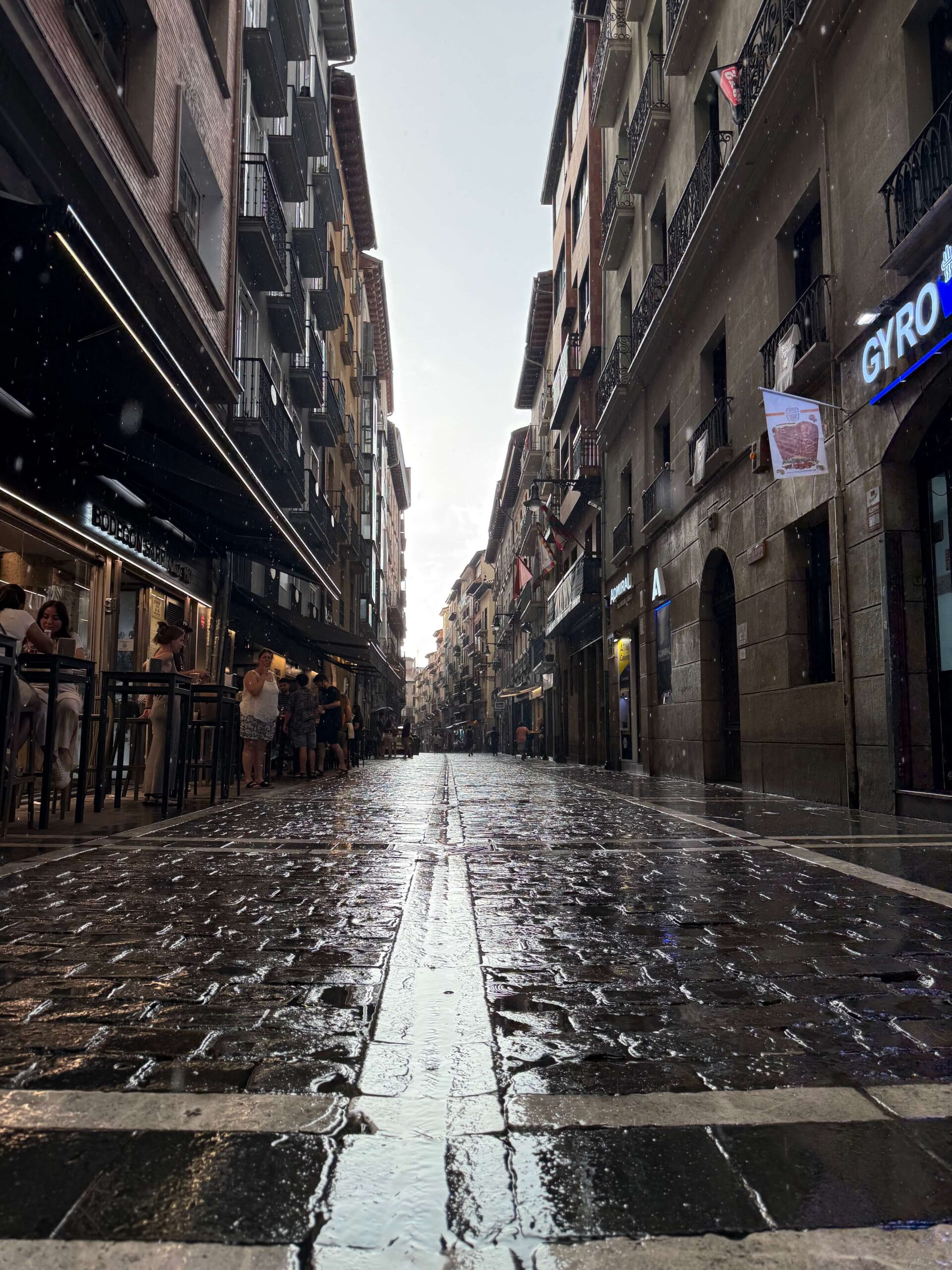
Book accommodations early near the Old Town (Casco Viejo) or close to the bull run route for easy access to the action. Hotels and apartments fill up fast.
Our reasoning for this is simple – you won’t need to rely on a car or public transportation. During the festival, there are so many sporadic street closings that it’s best to take matters into your own hands. Plus, you are close to everything pertaining to the festival.
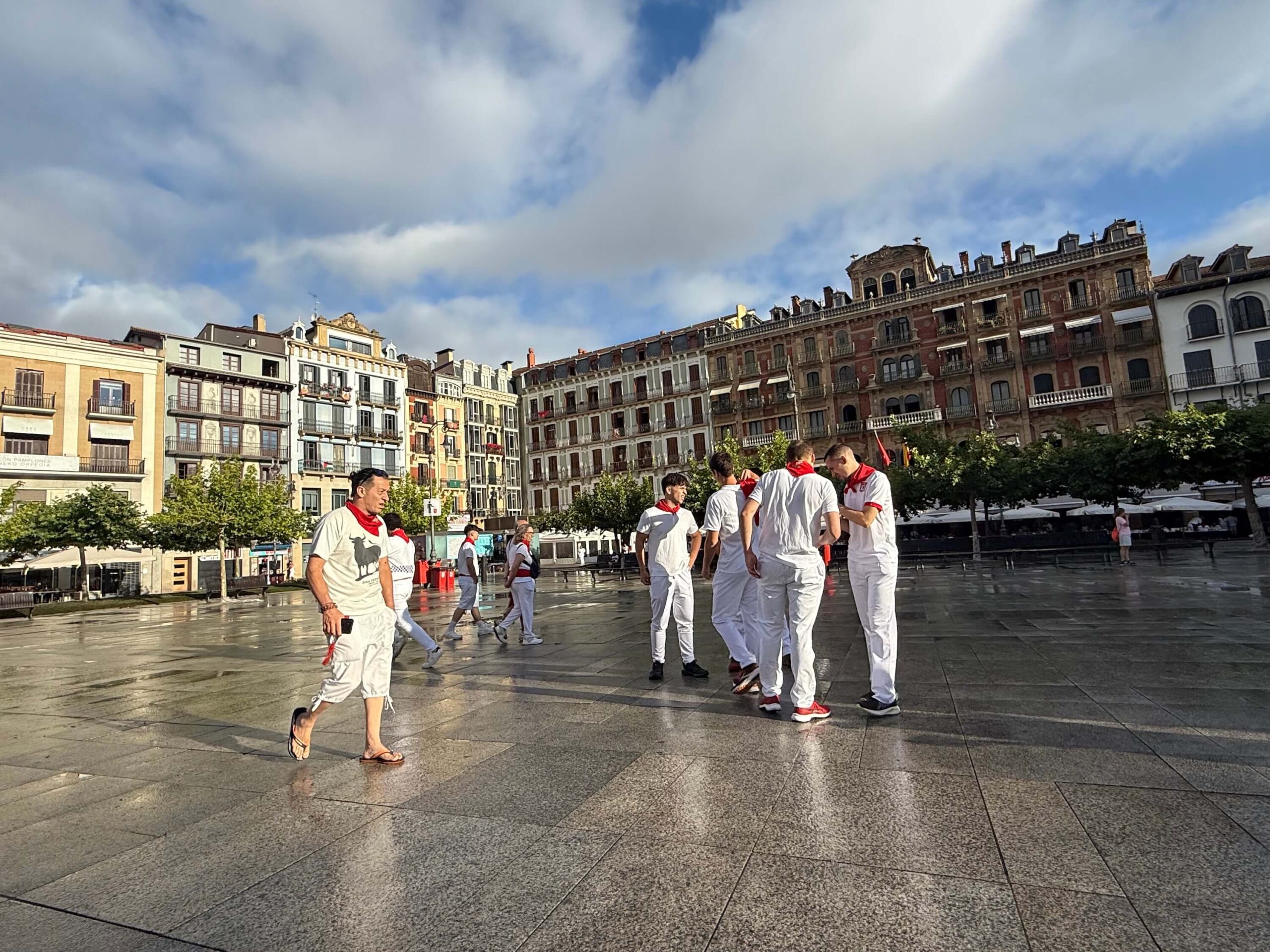
The Running of the Bulls is July 6-14 in Pamplona, Spain. The dates of the Running of the Bulls and San Fermin Festival are the same every year, no matter the day of the week. The festival begins on July 6th and concludes on July 14th.
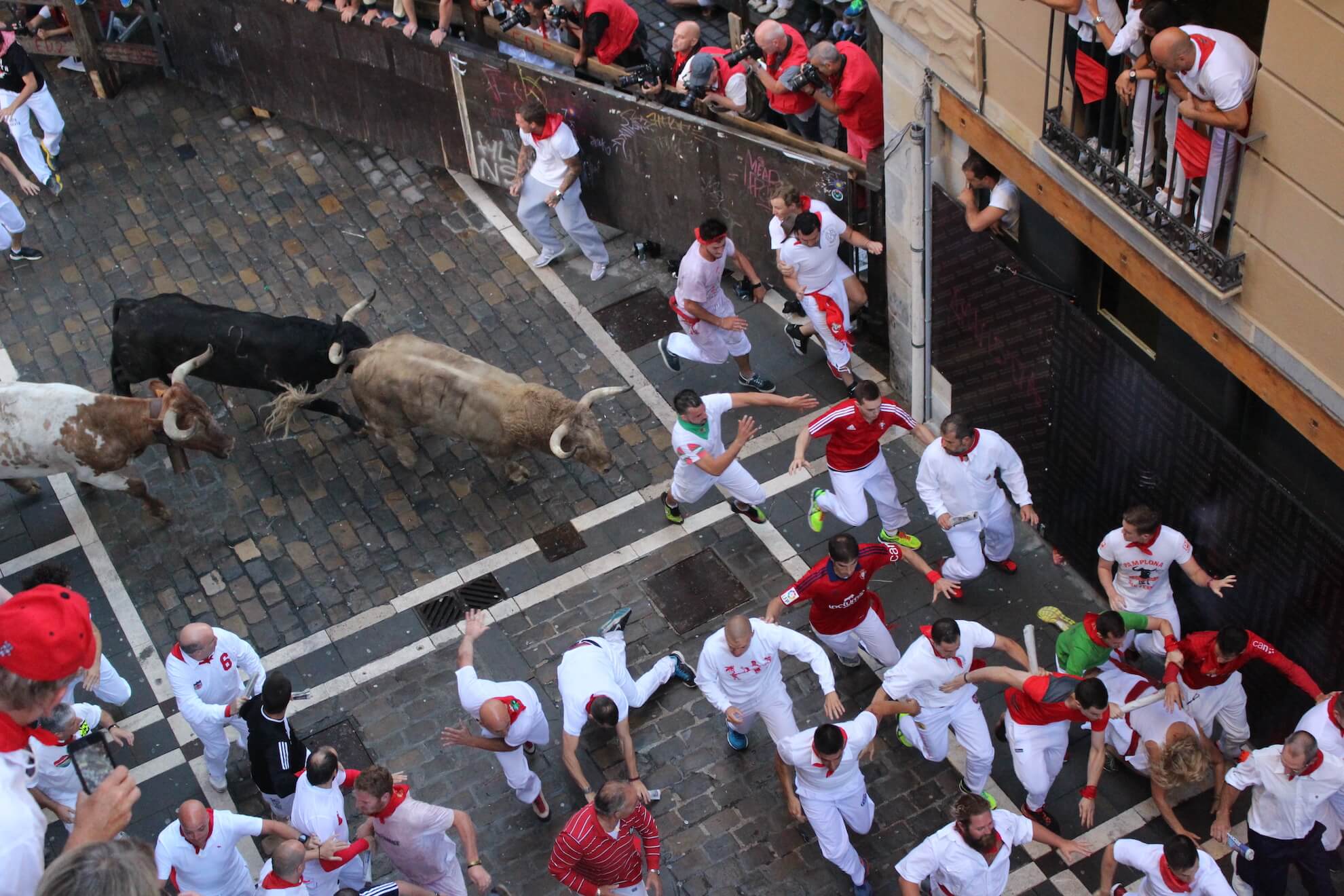
While thrilling, the Running of the Bulls is inherently dangerous, with injuries occurring every year. Only physically fit adults should participate, and it’s essential to know the safety rules and route.
No, there is not a registration process for the bull run, but you do need to be in a specific place a specific time or you will miss out. Bucket List Events solves this for you.
At 6:30am, Pamplona feels nothing like it does at noon.
Shops are closed. Streets are quiet. Runners gather in white and red. Tension builds—but so does excitement.
This is where having the right plan matters most.
Our guides meet you at the hotel and escort you through the controlled access points to the appropriate section of the course. You already know the route. You already know the exits. At that point, all that’s left is the experience itself.
The run lasts a few minutes.
The memory lasts forever.
Whether you run one day or multiple mornings, we’re there to guide the process—so you can focus on why you came in the first place.
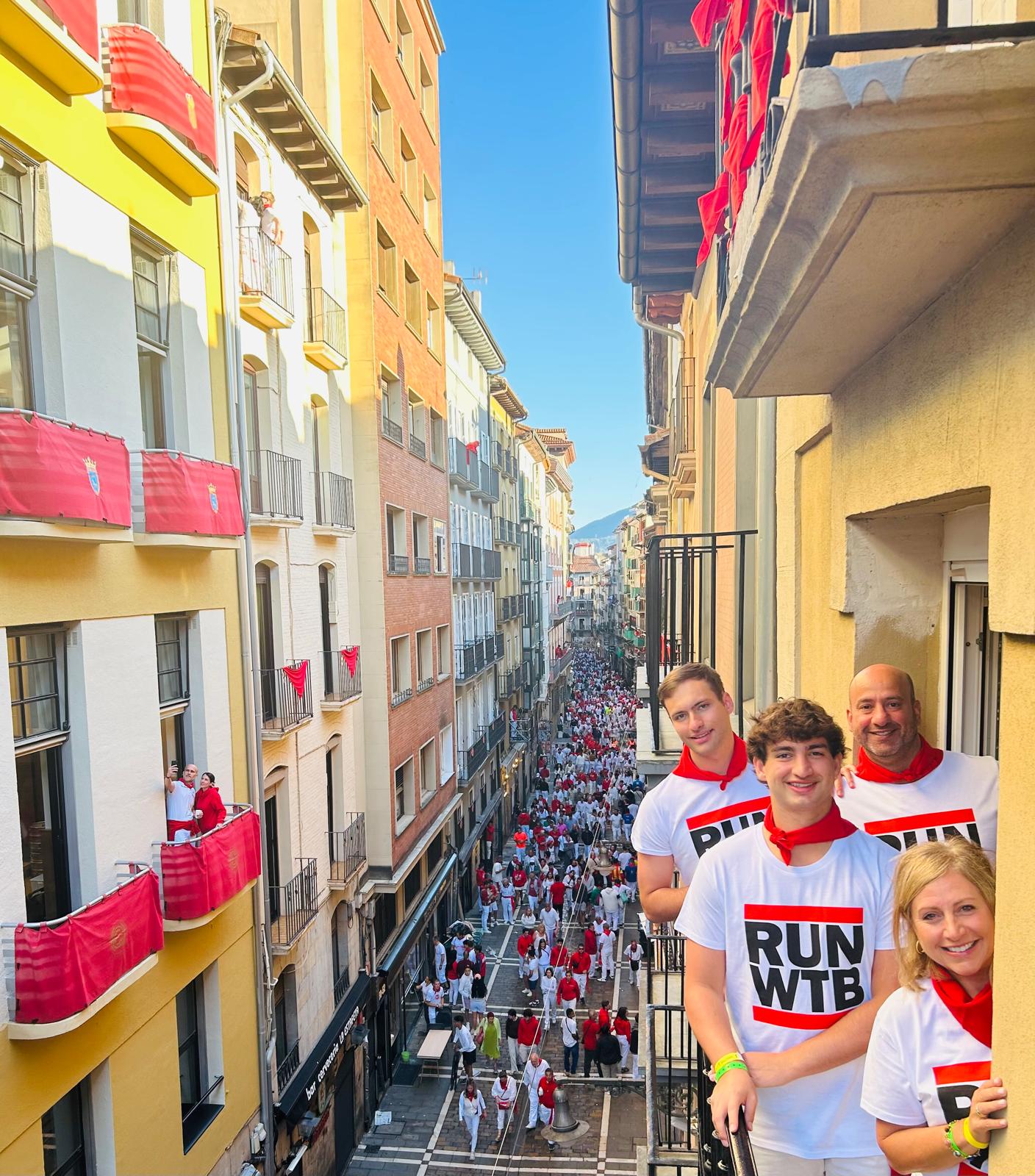
Hard question to answer, but most of our clients are between the ages of 20-65. But it varies with each group. We’ve had guests that are 70+ years of age as well as kids with their families and college students. We don’t have an age limit; you just have to be ready to have a good time!

We manage around a dozen different balcony locations along the Running of the Bulls course.
Our most popular spots are at La Curva (the corner of Calle Mercaderes and Calle Estafeta) and up and down Estafeta Street.
Both locations have their strengths:
Estafeta Street offers the longest view since it is the longest stretch of the run. La Curva is more unique since there is a sharp 90 degree turn. If there is action, it usually starts at La Curva.
All locations serve a small Spanish style breakfast and access is from 7-8:30 am. A Bucket List Events staff member will escort you from our headquarters to your assigned balcony.
Check out our Running of the Bulls balconies page for full details.
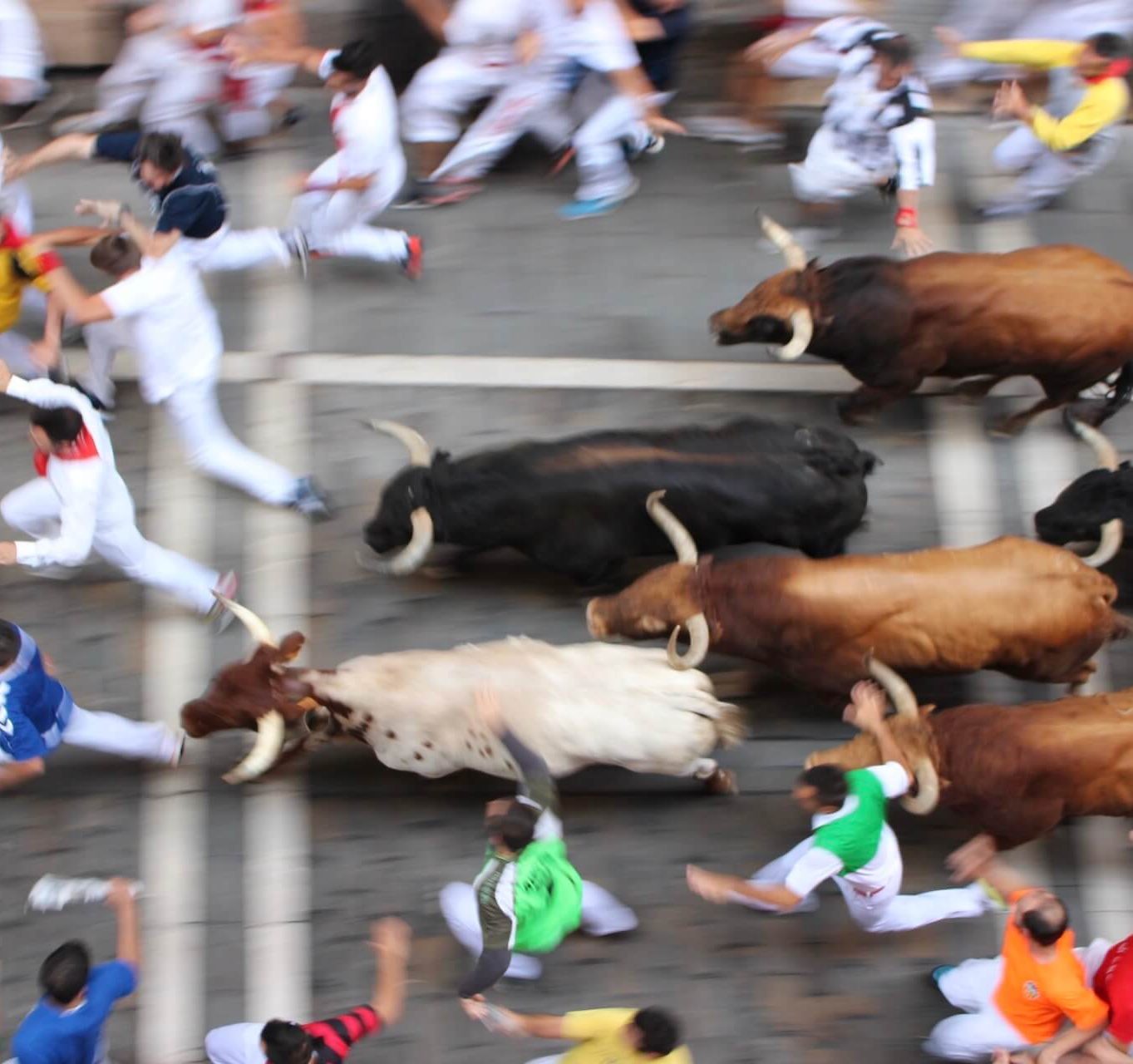
We have our opinions, but here is the word for word response from a neutral search engine:
“The best spots include balconies along Estafeta Street, the bullring, and the start at Calle Santo Domingo. Balcony rentals offer the best views and safety.”
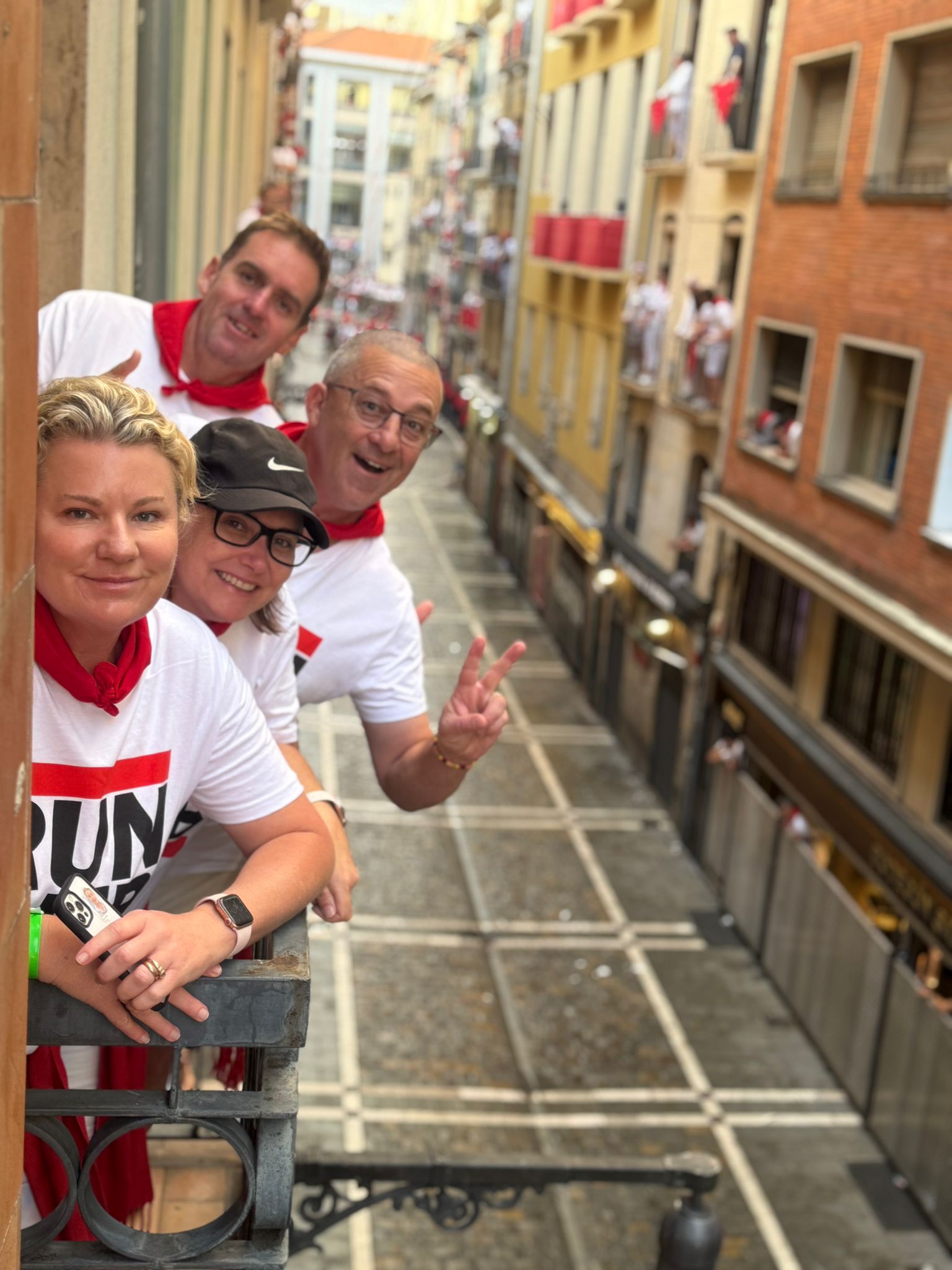
Yes! We accept an exact number of people to watch from each balcony and share breakfast with us each morning. We want everyone to be able to see the run easily. Therefore, we suggest that you reserve your space as soon as possible.
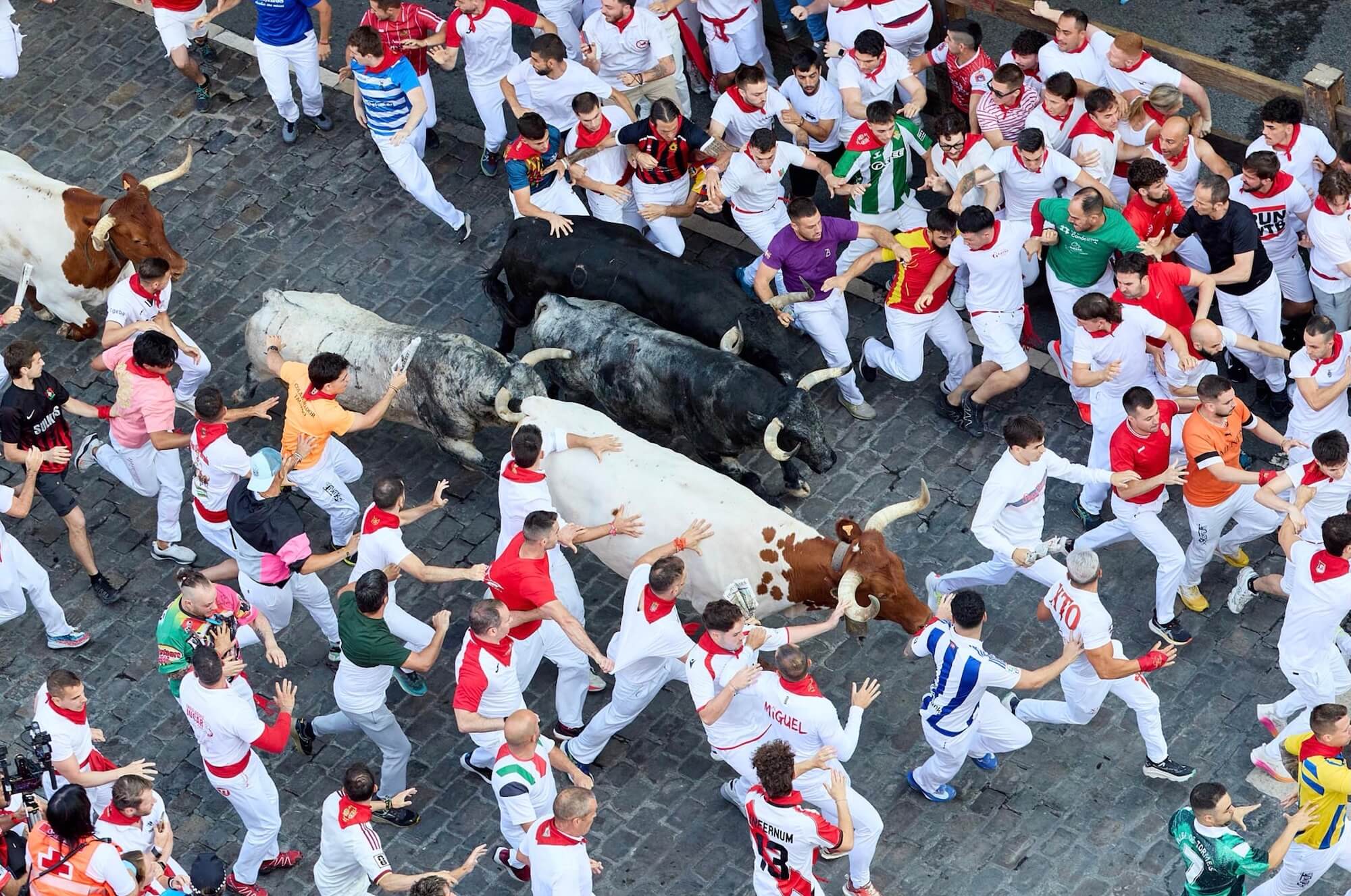
Yes, all of our tours include 1-2 mornings to watch the run on our Balcony, and additional mornings on the balcony can be purchased based on availability. Package clients can purchase these at a discounted rate, just ask! Click here to check out more about the views and info on our VIP balconies.
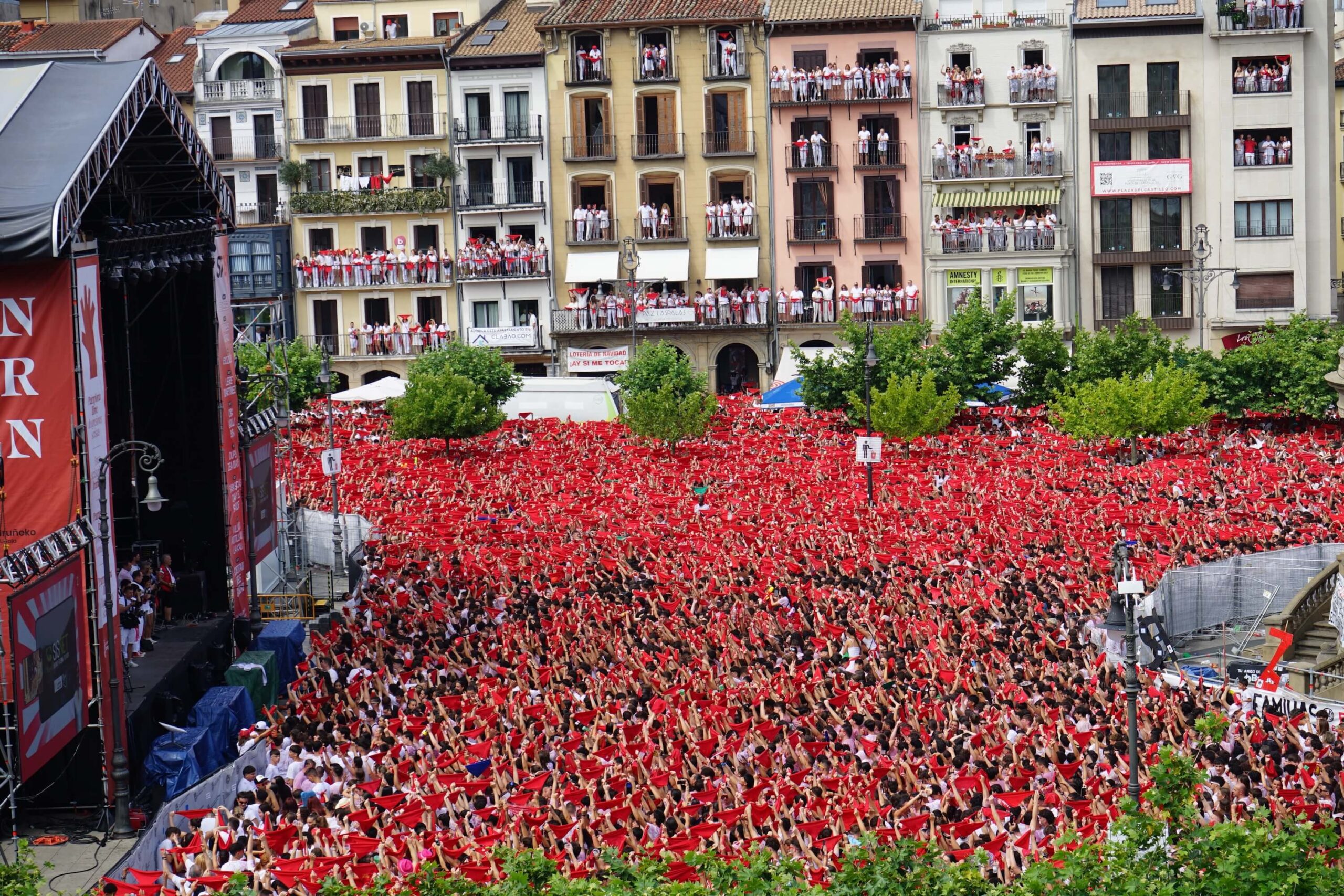
Regardless of the day of the week the festival begins, the first 48 hours of the San Fermin celebration will be the most attended and boisterous days of the week. Hotel rooms are in higher demand and acquired at higher rates.
There is also a one-time event called the Chupinazo, which is an extremely popular event. We host an open house at our balcony to watch some of the debauchery during the opening day.
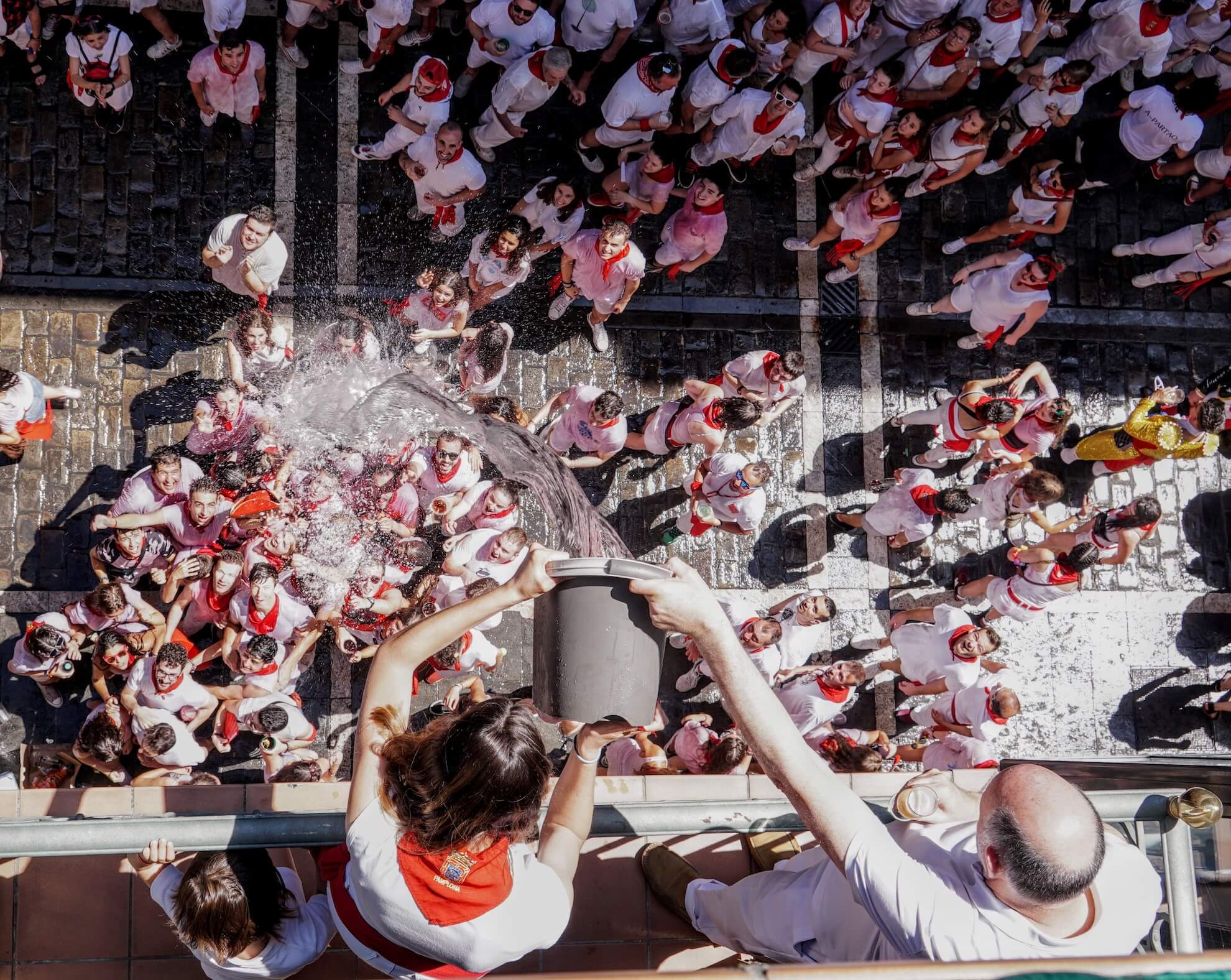
At 12:00 noon every July 6th, the square in front of the Town Hall witnesses chaos when the start of the San Fermín Fiesta is marked by a rocket launch.
All morning, crowds pack in like sardines at the Plaza Ayuntamiento. The Mayor and members of the Council step out onto the balconies of the Town Hall to greet the crowds.
There is an announcement: “Pamploneses, Pamplonesas, Viva San Fermin! Gora San Fermin!” (people of Pamplona, long live San Fermin!). The crowd responds with cries of “Viva!” and “Gora!”
The square erupts as hundreds of bottles of champagne are uncorked and sprayed all over the crowd. During the day you can expect atmospheric singing, dancing, plenty of sangria and non-stop partying in the streets.
By non-stop, we mean non-stop. At any point, the streets are filled with partiers of all ages, depending on the time of day.
This festival makes Bourbon Street in New Orleans look like an afternoon tea party.
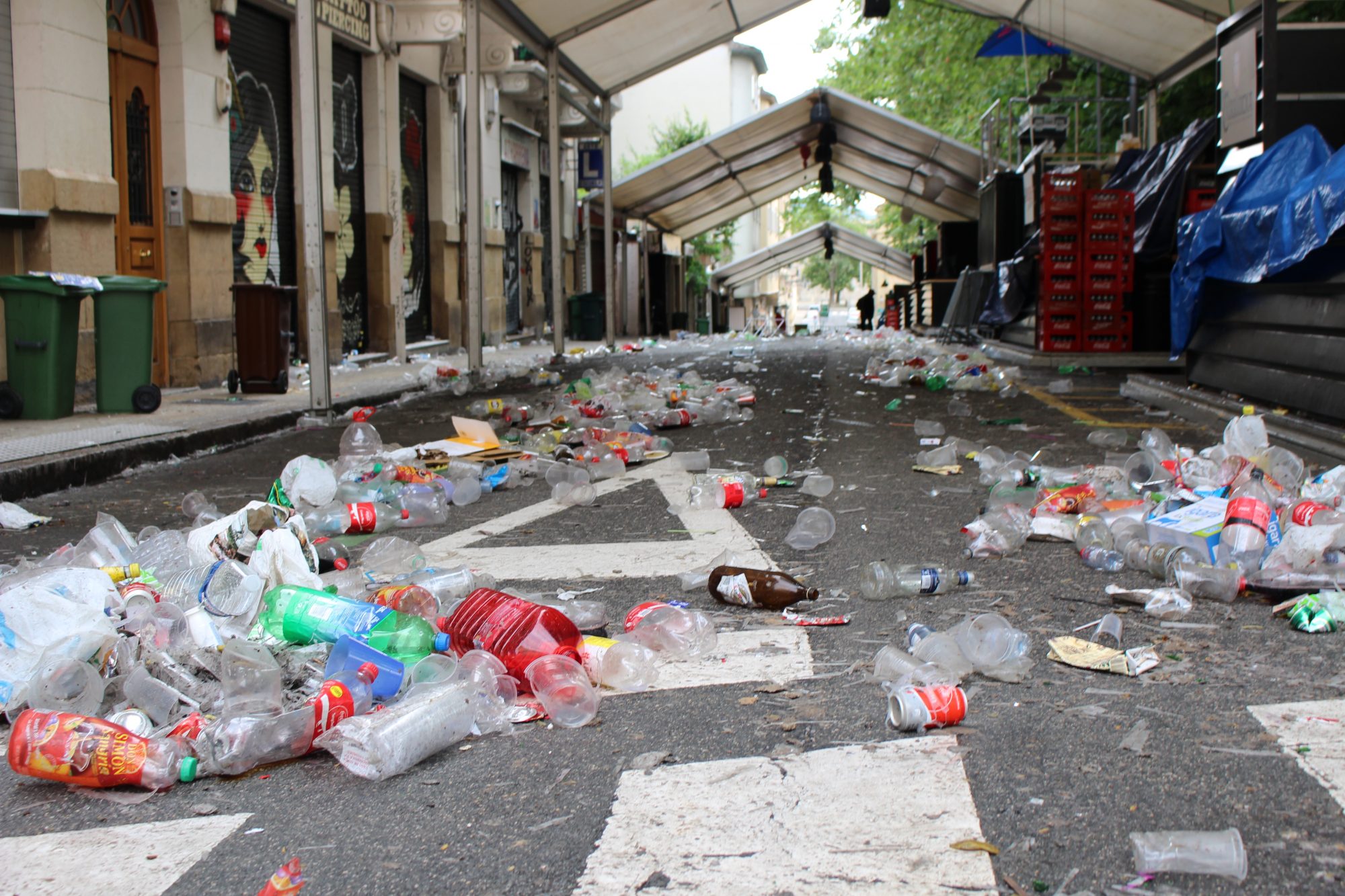
It’s been a fine-tuned process that we believe is the best of both worlds.
We have found that hotels located within the party areas are often congested and sleep is hard to find, not to mention significantly more expensive. We use the Tres Reyes property that is close to the heart of the festivities, but far enough away that uninterrupted slumber is obtainable.
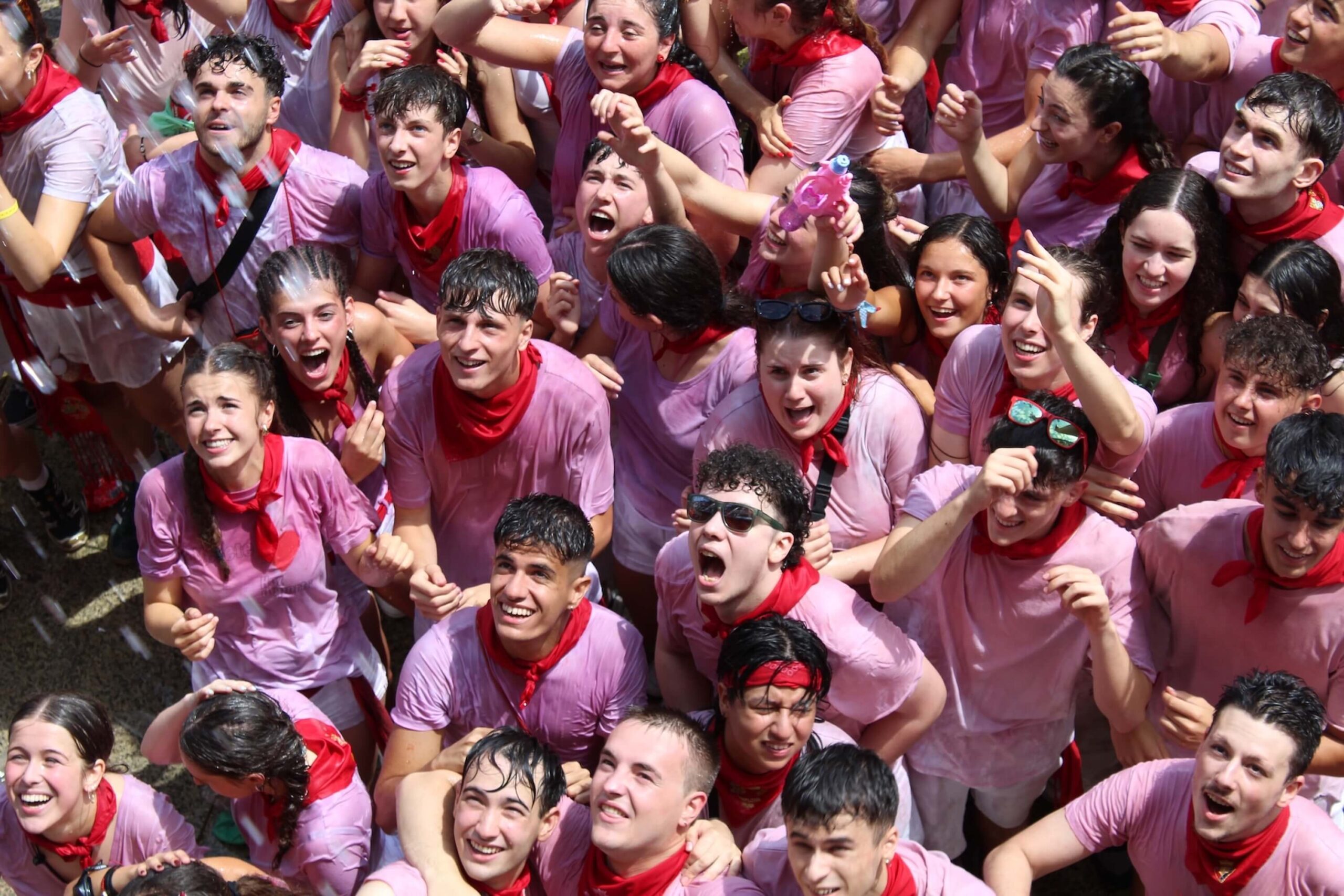
The drinking age in Spain is 16 years old. Cheers!
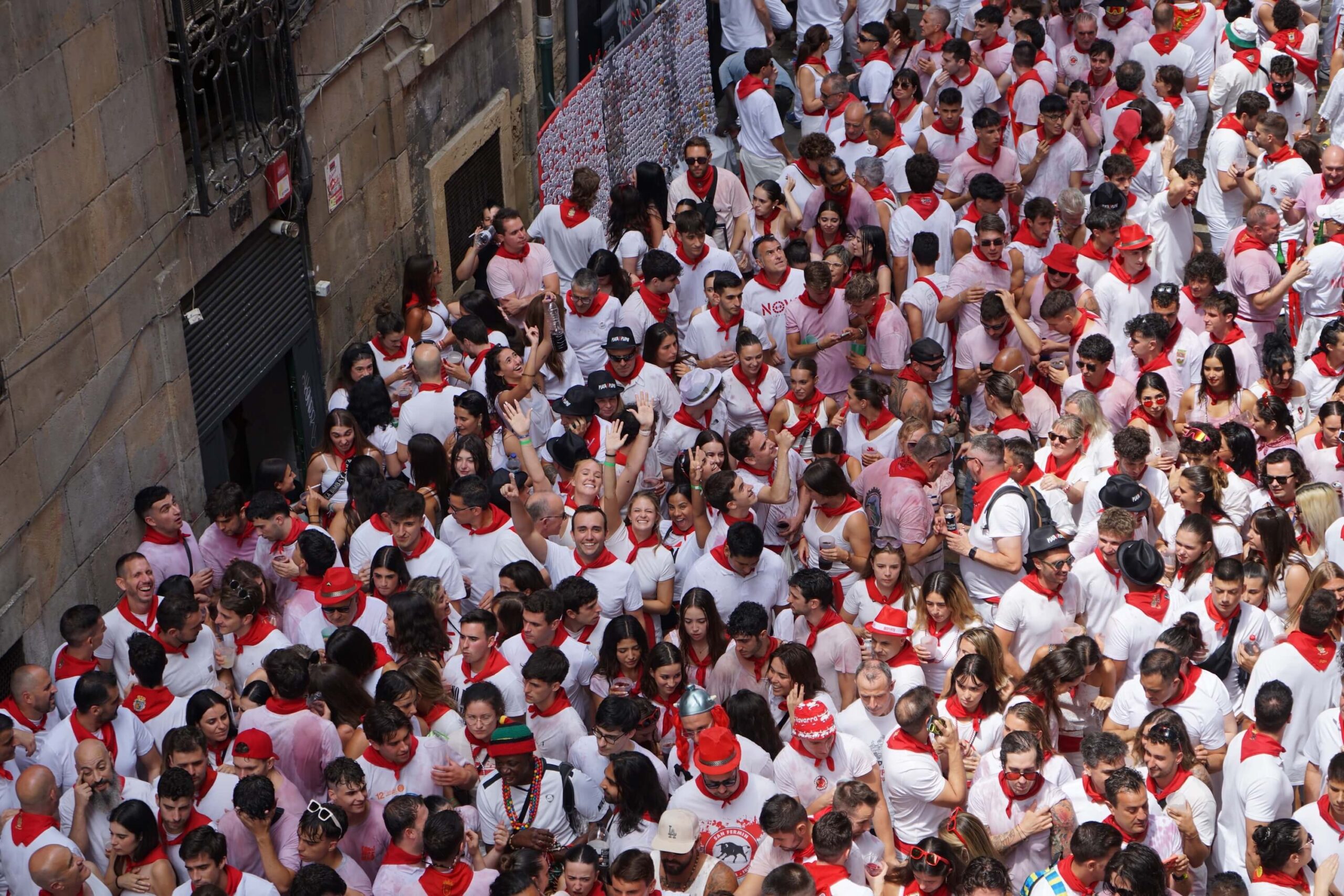
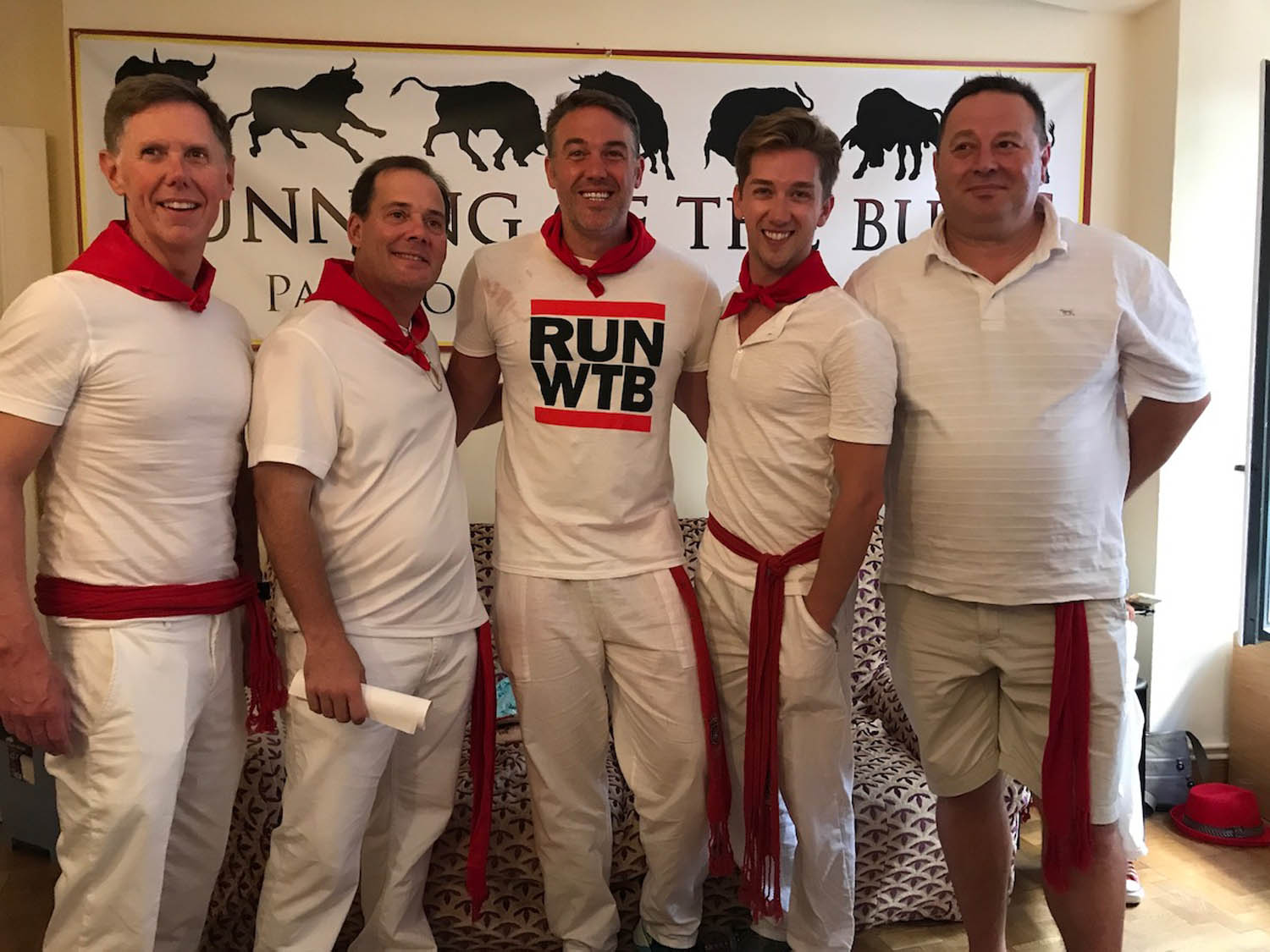
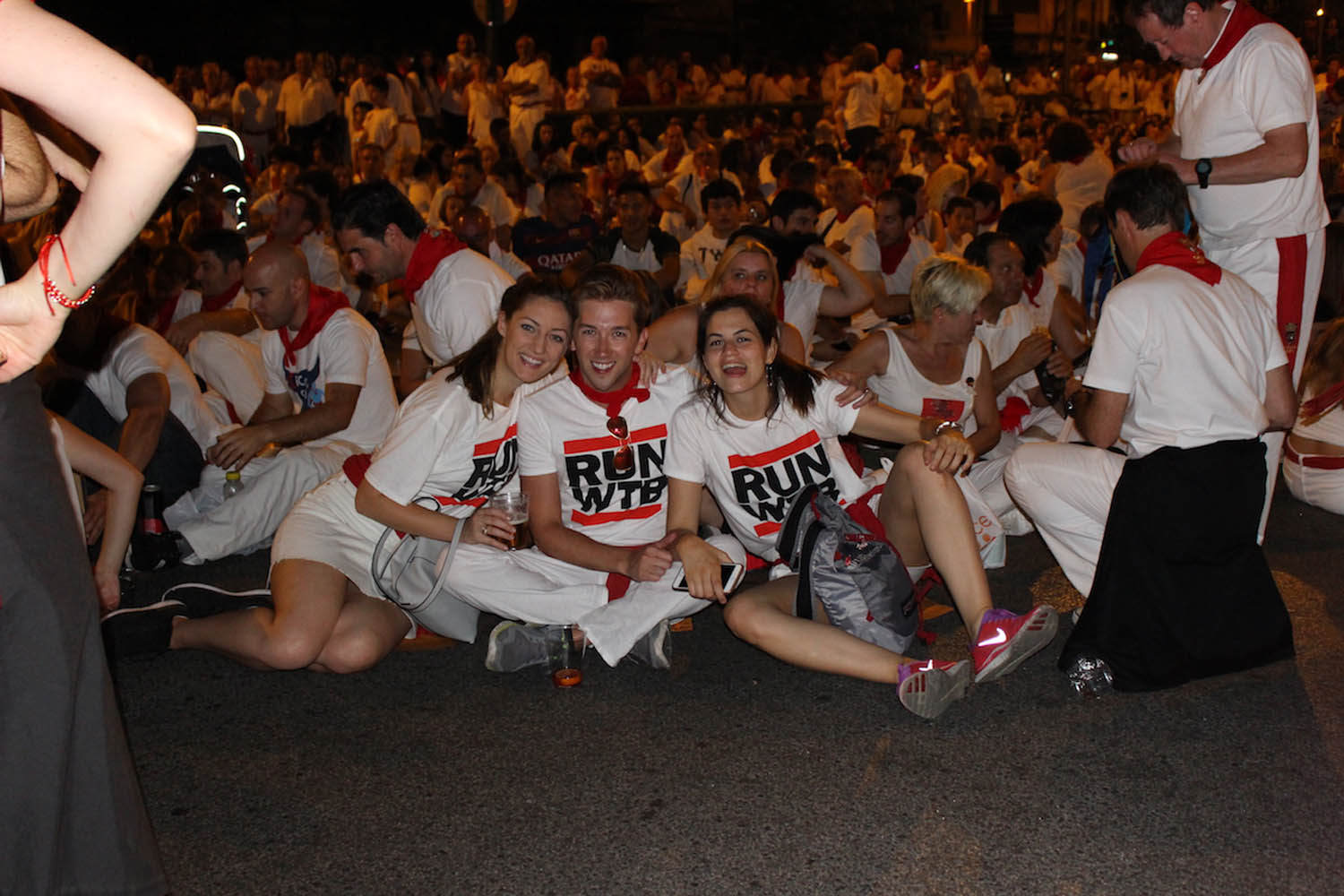
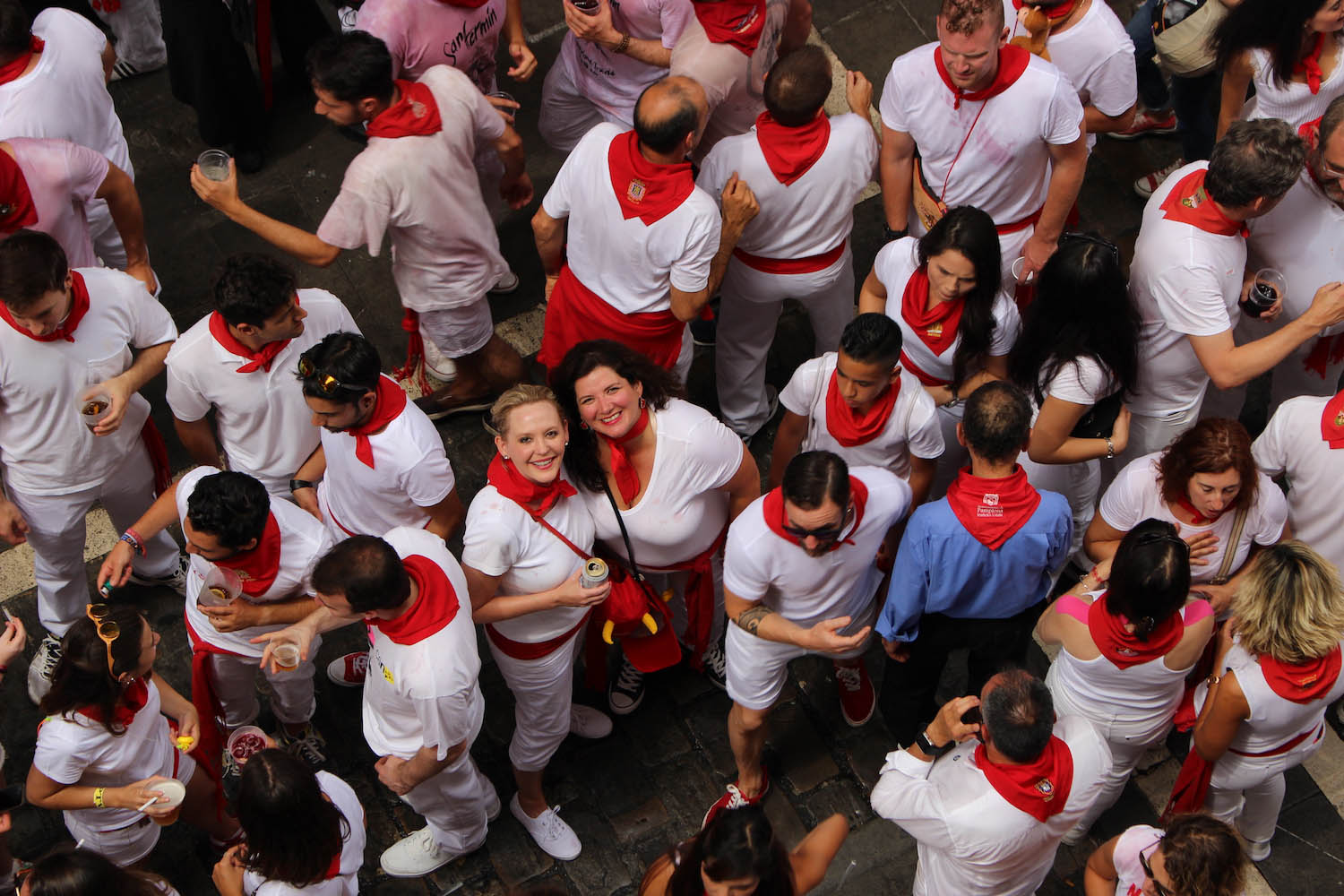
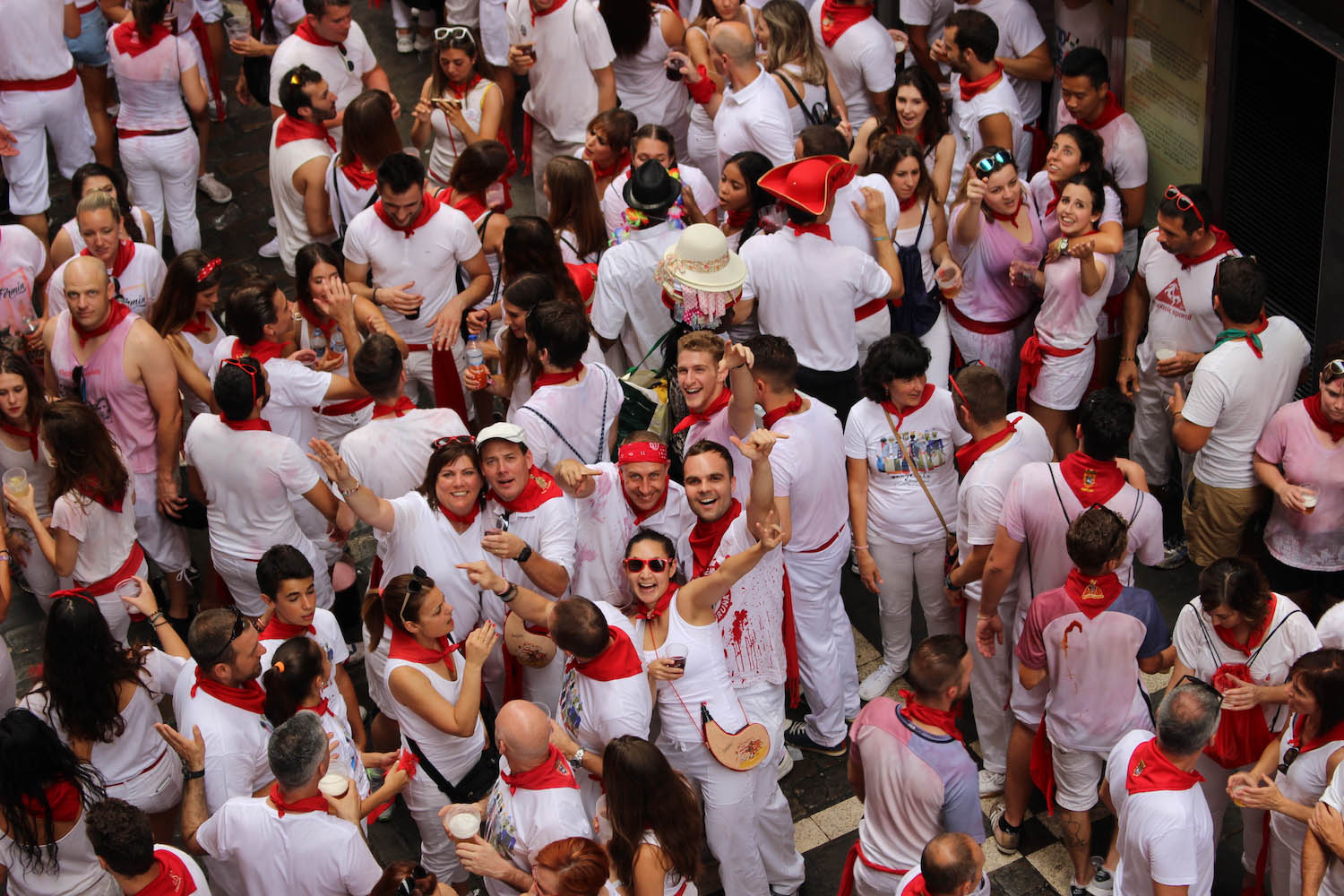
This is not just for the participants in the run; everyone is wearing this, male and female. The official San Fermin costume is a white shirt, white pants/skirt, a red sash, and a red neck-scarf.
We’ll tell you now, but remind you later that the official way to wear the red waist sash is on the left side of your body, if you wear it on the right the locals will know you’re a tourist!

Literally everywhere. There are pop up shops all over the city, and several department stores.

Expect to eat a healthy dose of tapas, paella, and fish while in Pamplona. Spain has amazing food, and it’s a strong part of the culture to make delicious food available almost anywhere.

With the increased population during the festival, the city brings in mobile restrooms that are stationed throughout the city. When you’re at one of our balconies of course there will be restrooms, but when you’re on the streets you’ll want to duck into a bar or restaurant or public mobile restroom.
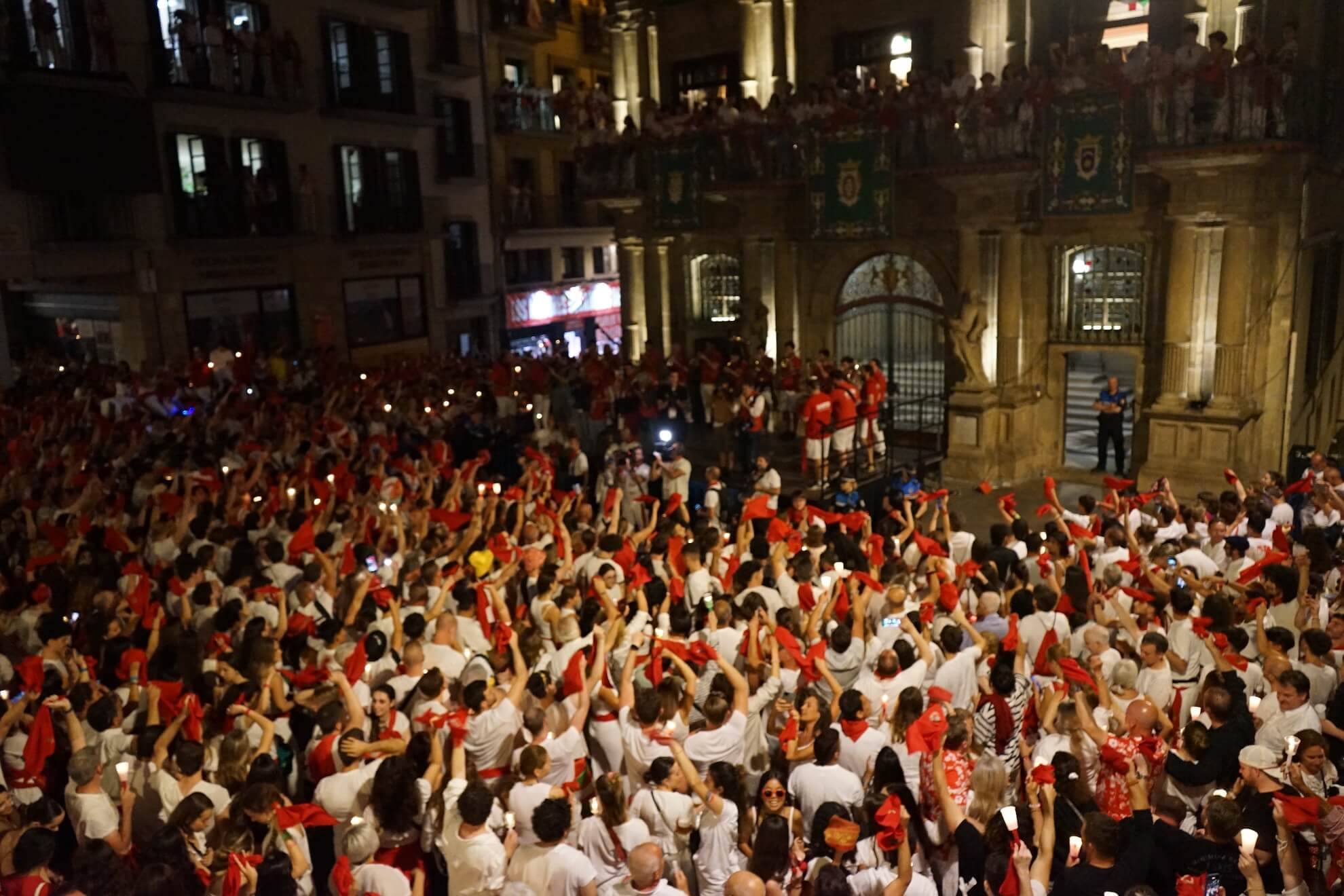
This is a tricky question to give an exact answer considering the clubs stay open all night. In regards to actual scheduled activities, the run begins at 8:00 AM and the night capping public fireworks are at 11:00 PM. There are concerts beginning at midnight each night on stages set up around the old town.
 Train travel during the festival is extremely busy and we advise you book tickets in advance to ensure a seat. The train journey between Madrid and Pamplona is about 3 and ½ hours and is 4 hours by car. The train journey between Barcelona and Pamplona is about 6 hours. You can book your RENFE tickets 60 days in advance.[/caption]
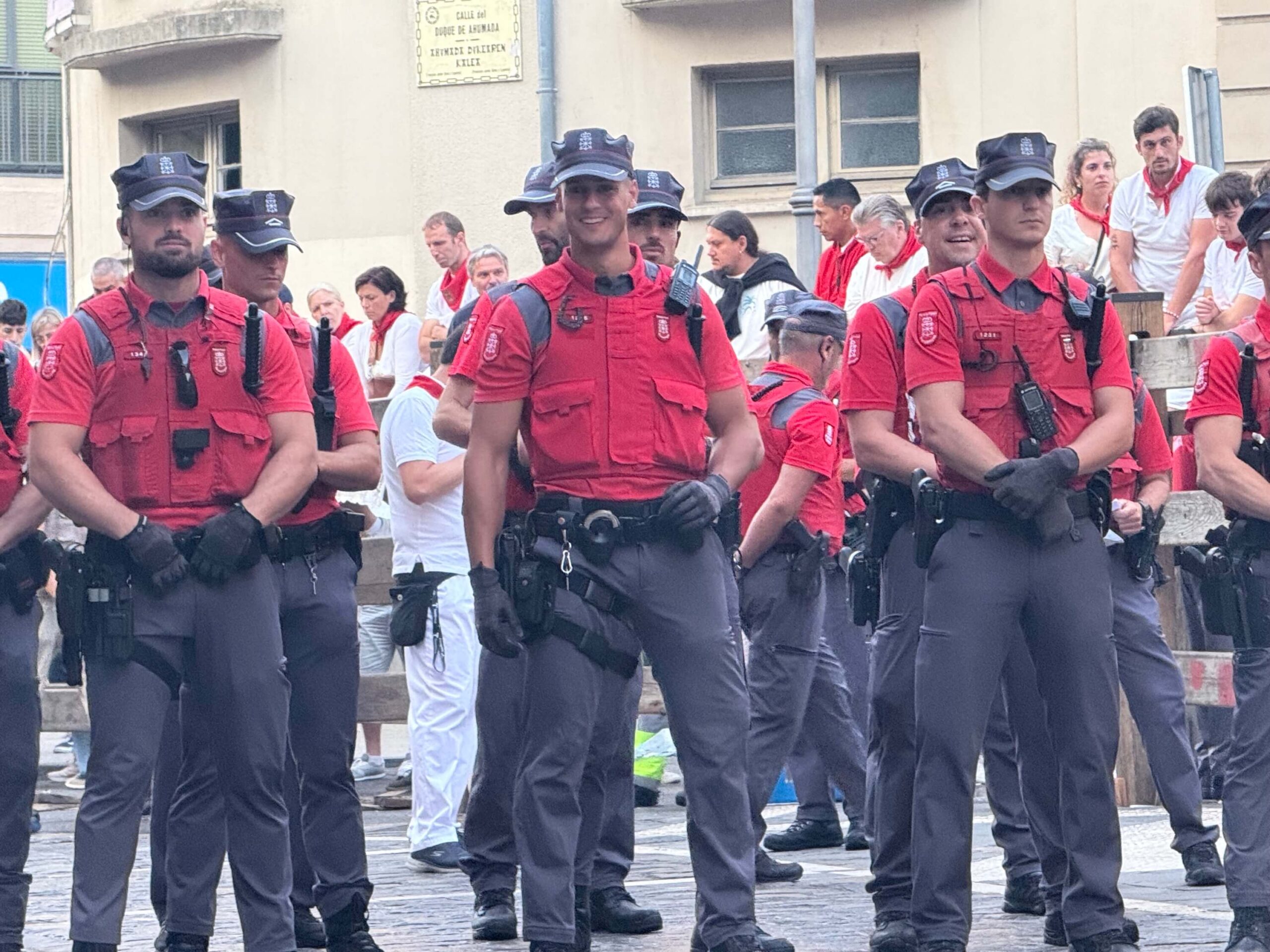
Yes, Pamplona is a very safe city. But just like any travel or festival experience, be aware of your surroundings. Keep money in a safe place (not in your back pocket). Security is very present and visible throughout the festival, but you should always be careful in unknown surroundings.

Bars and nightlife might seem to be the only thing that exists in Pamplona if you show up in the city right in the middle of San Fermin. They say that Pamplona has more bars than Bangkok! While it has to be admitted that the bars are frequented regularly by the locals all through the year, San Fermines definitely provides an opportunity to have their cash cow. So if you’re into drinking, Pamplona will please you to no end. But please be courteous.
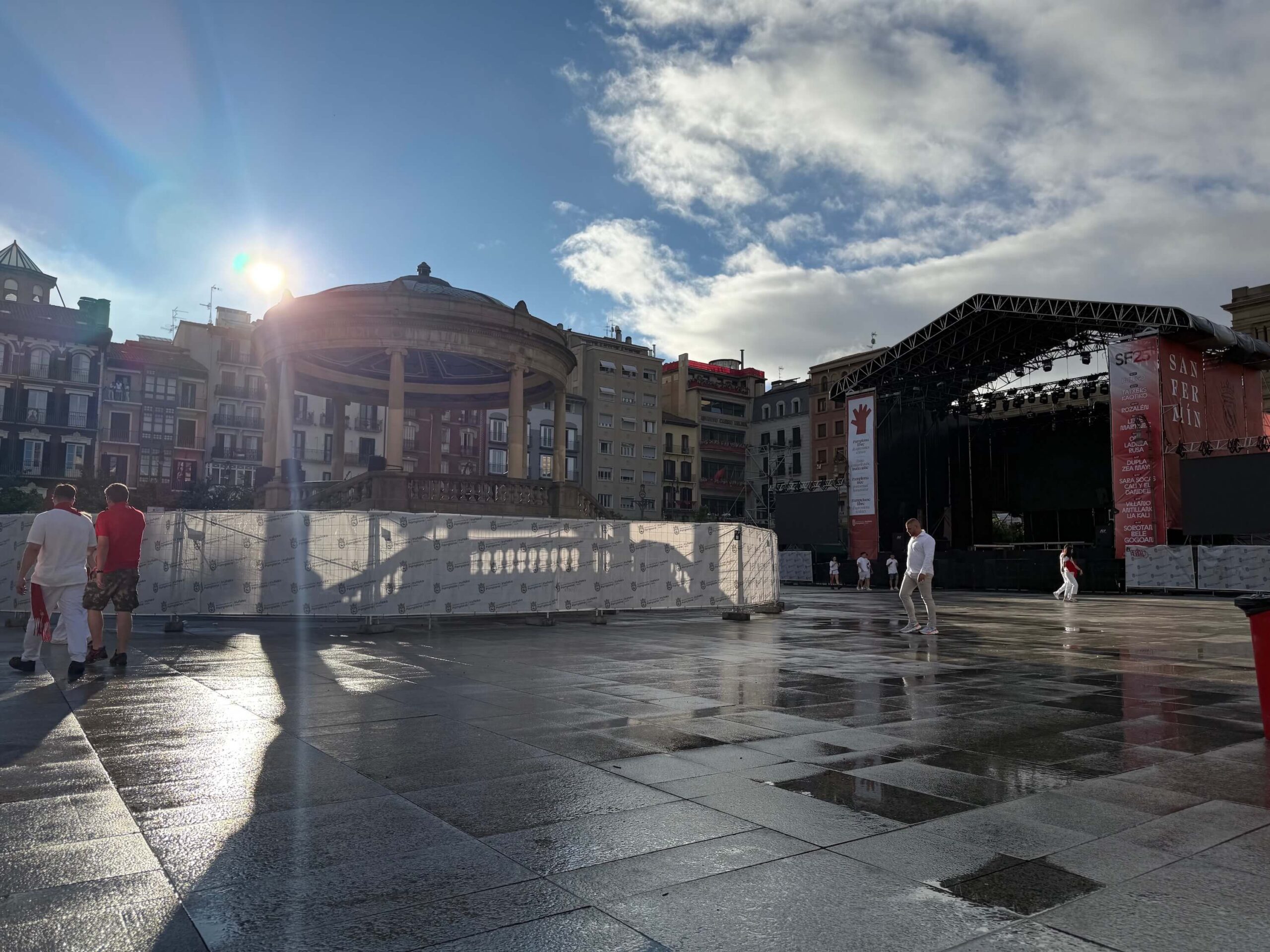
Summer in Pamplona tends to be hot and dry. But a torrential downpour can occur on occasion as well. Pack accordingly. Most of the days it’s pretty hot while it cools a bit at night. Expect temperatures to be in the 90s.
One day, you’ll be wanting to take all your clothes off (because it’s hot, not because you’ve had too much sangria). The next day you might be cursing yourself for not bringing a jacket.

Since the ninth century, more than a million people have made the pilgrimage to the Santiago de Compostela, a cathedral in the northwest corner of Spain, where the bones of St. James are said to have been discovered. Pamplona is the first city that the pilgrim’s route passes through on the road to Compostela and many pilgrims can be seen making the trek through Pamplona. The city also has its share of religious sites to see including a Gothic bridge and cathedral. The city of Pamplona’s tourist website has a full listing of these religious sites if you’re interested in some Pilgrim and church sightseeing.
These scalloped shells are seen around Pamplona on the sidewalks and streets, guiding the pilgrims on their route to Santiago de Compostela.
In the Summer of 2019, three of our San Fermin guides completed the Camino. They have prepared an incredible set of tips, tricks, and advice for everyone.
Ultimate Camino de Santiago Guide – Trip Planning
Ultimate Camino de Santiago Guide – Frequently Asked Questions
We traditionally have clients that arrive or depart from larger cities such as Madrid or Barcelona, but the city we recommend in the area is San Sebastian
Located a mere 50 miles from Pamplona, the beautiful coastal city of San Sebastian is a highly recommended destination during your trip to Spain. Beautiful beaches, incredible architecture and perhaps the best food in Europe, you can knock out this lovely location.

- Parade of Giants – held each morning with huge paper mache figures dancing and swirling in the streets
- Fire bull – or what appears to be a man in a steel drum covered in firecrackers, is let loose each evening to entertain young and old
- Corrida – (bull fights) are held each evening at 6:30 PM in the arena when three Matadors fight two bulls each
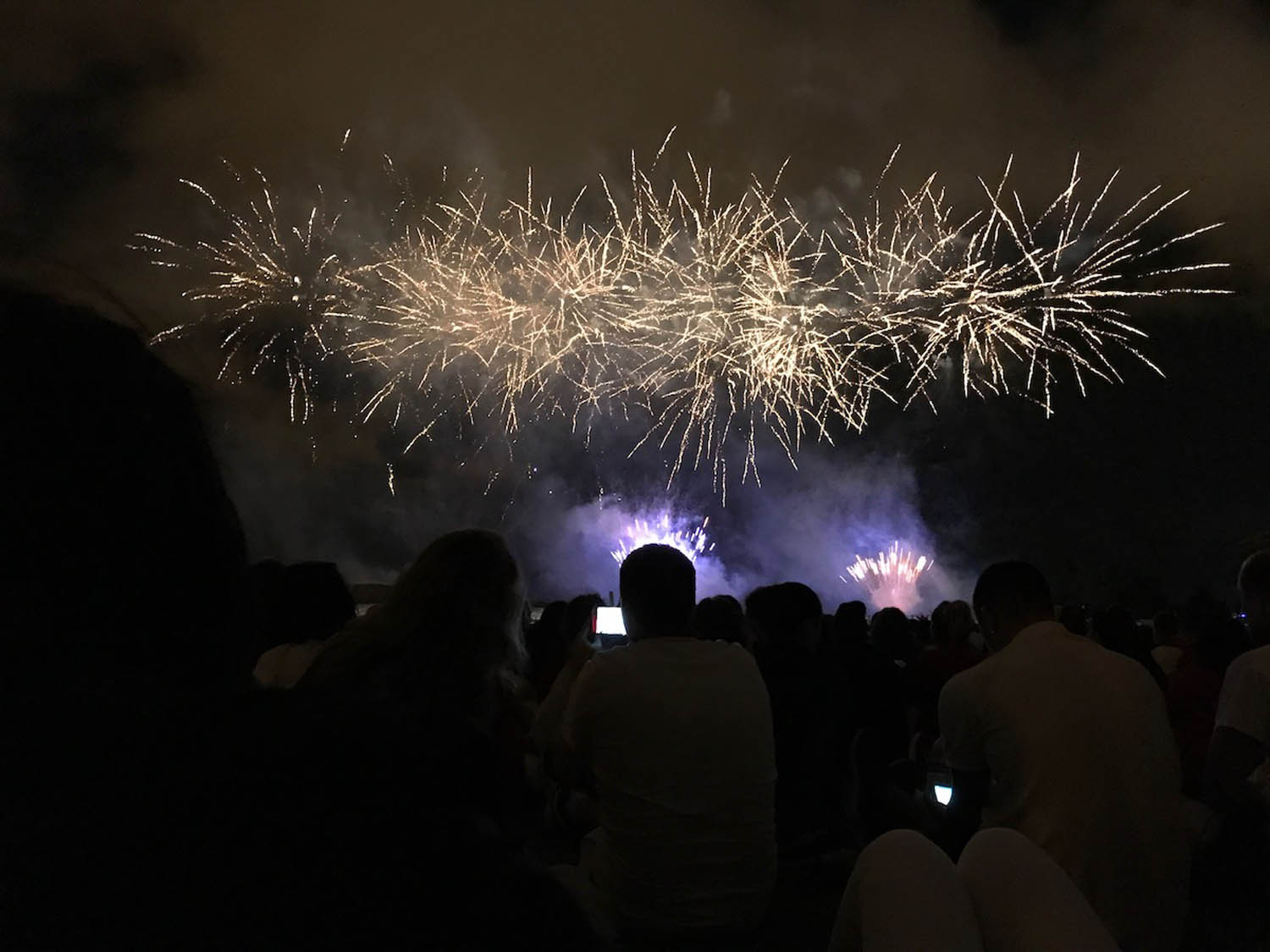
- Fireworks display – is put on each evening near the old Citadel at 11:00 PM
- Closing Ceremony – the locals gather in the main square, the Plaza de Castillo, to form a candlelight procession to the old church to bid farewell to the festivities for another year. It’s followed, of course, by yet another massive firework display!
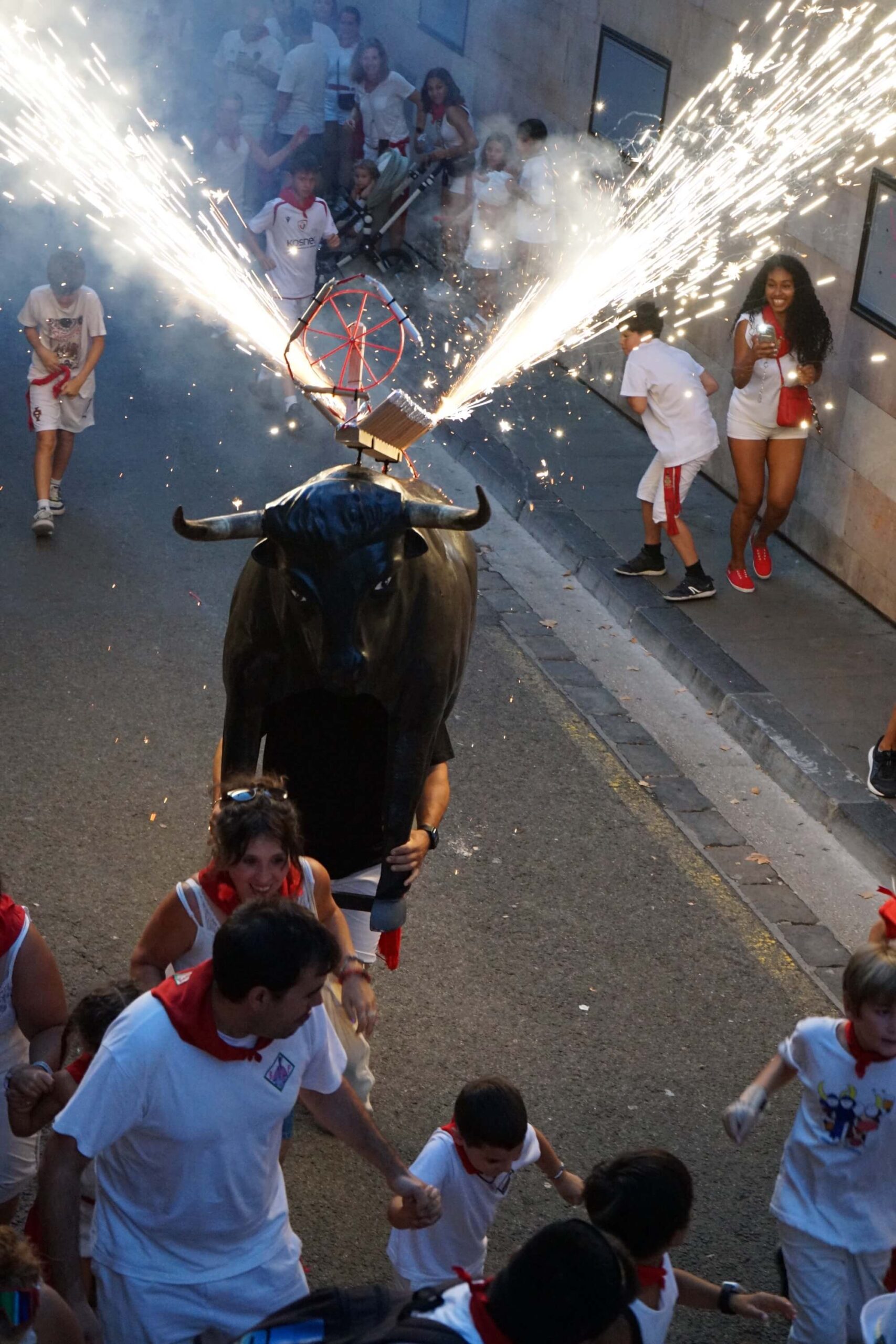
The Fire Bull, known in Spanish as Toro de Fuego, is a popular nighttime tradition during the San Fermín Festival in Pamplona, Spain.
Unlike the actual Running of the Bulls, the Fire Bull isn’t a real bull. It’s a bull-shaped frame carried by a person, fitted with fireworks that shoot sparks as the person runs through the streets.
Here’s are the details:
When: Typically around 9:45 PM during the San Fermín festivities, July 6–14.
Where: In central Pamplona, traditionally around Plaza de Santiago near City Hall.
What happens: A person carrying the bull-shaped structure runs through the crowd while fireworks shoot sparks in different directions.
Atmosphere: It’s a lively, chaotic, family-friendly tradition, although spectators should be mindful of the sparks.
: Free to watch.
The Fire Bull is especially popular with local families and children, making it a very different experience from the morning bull runs.