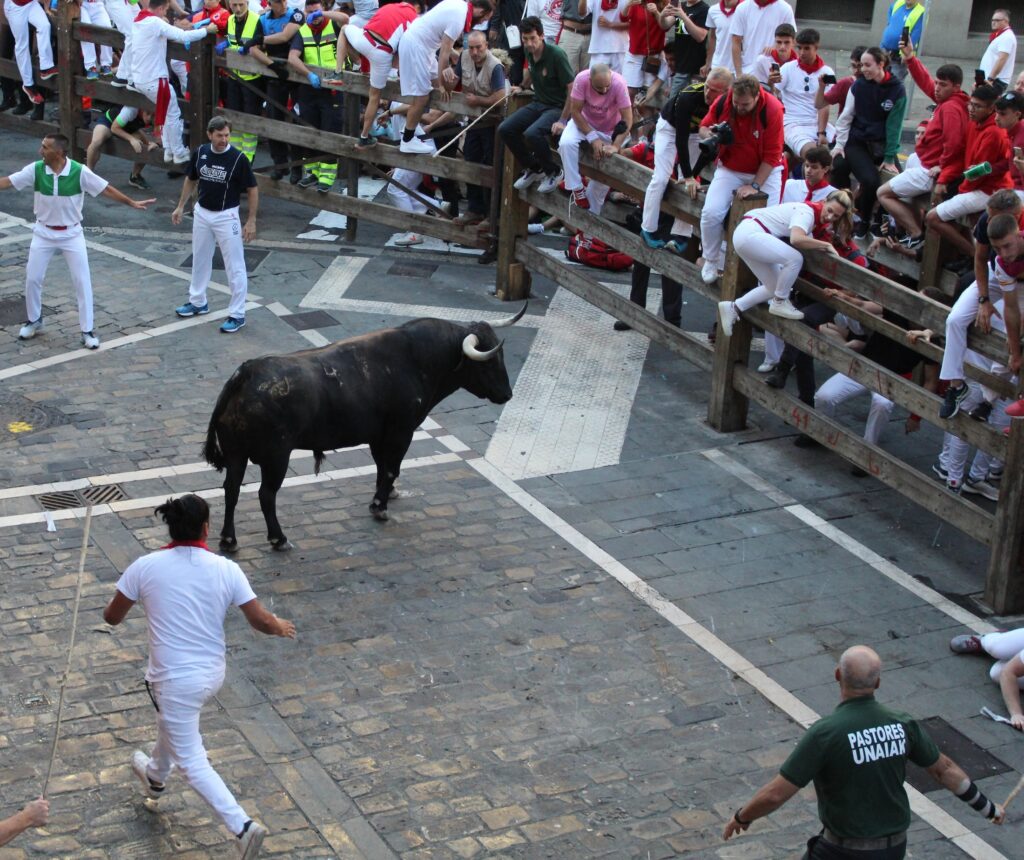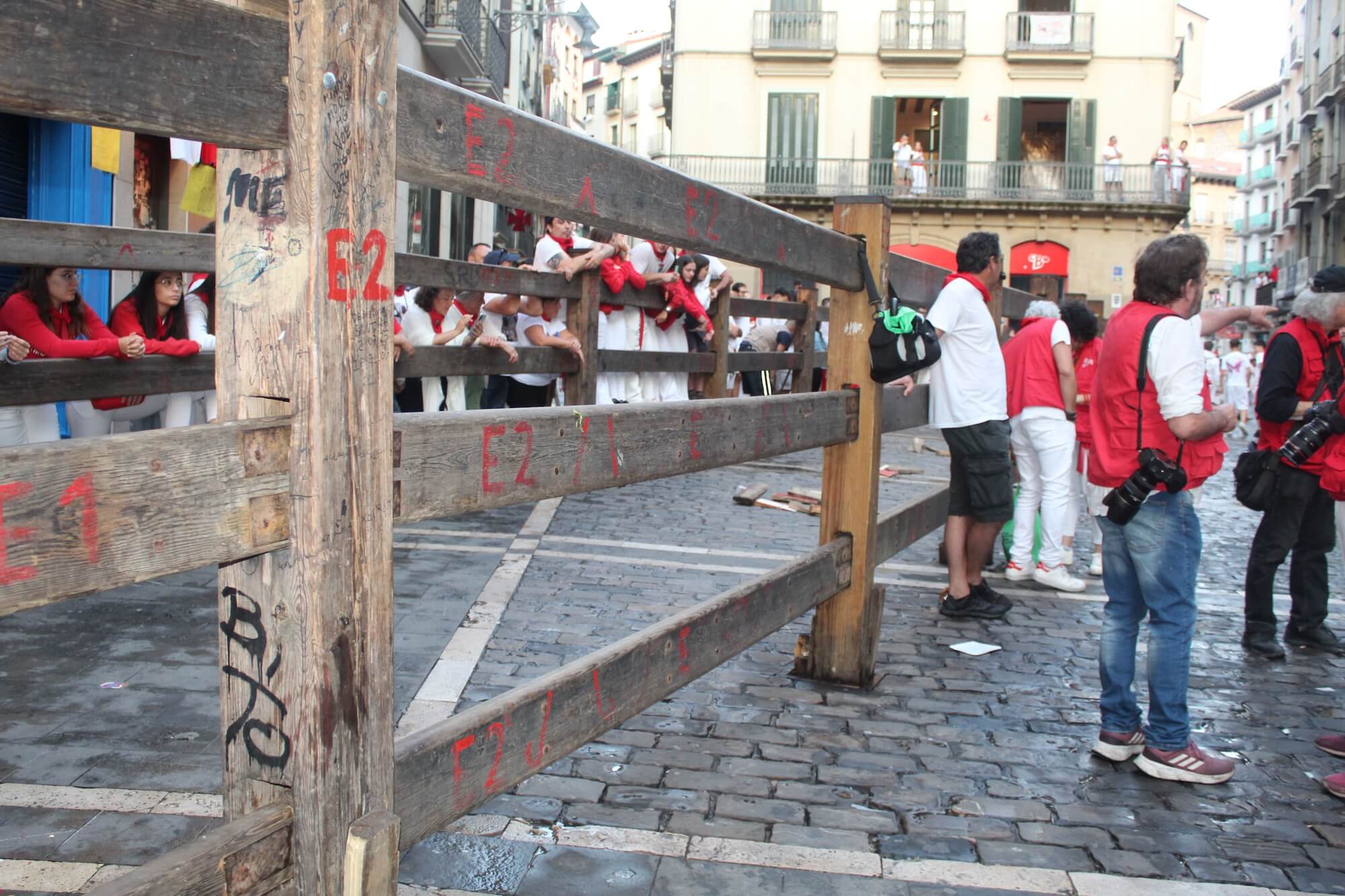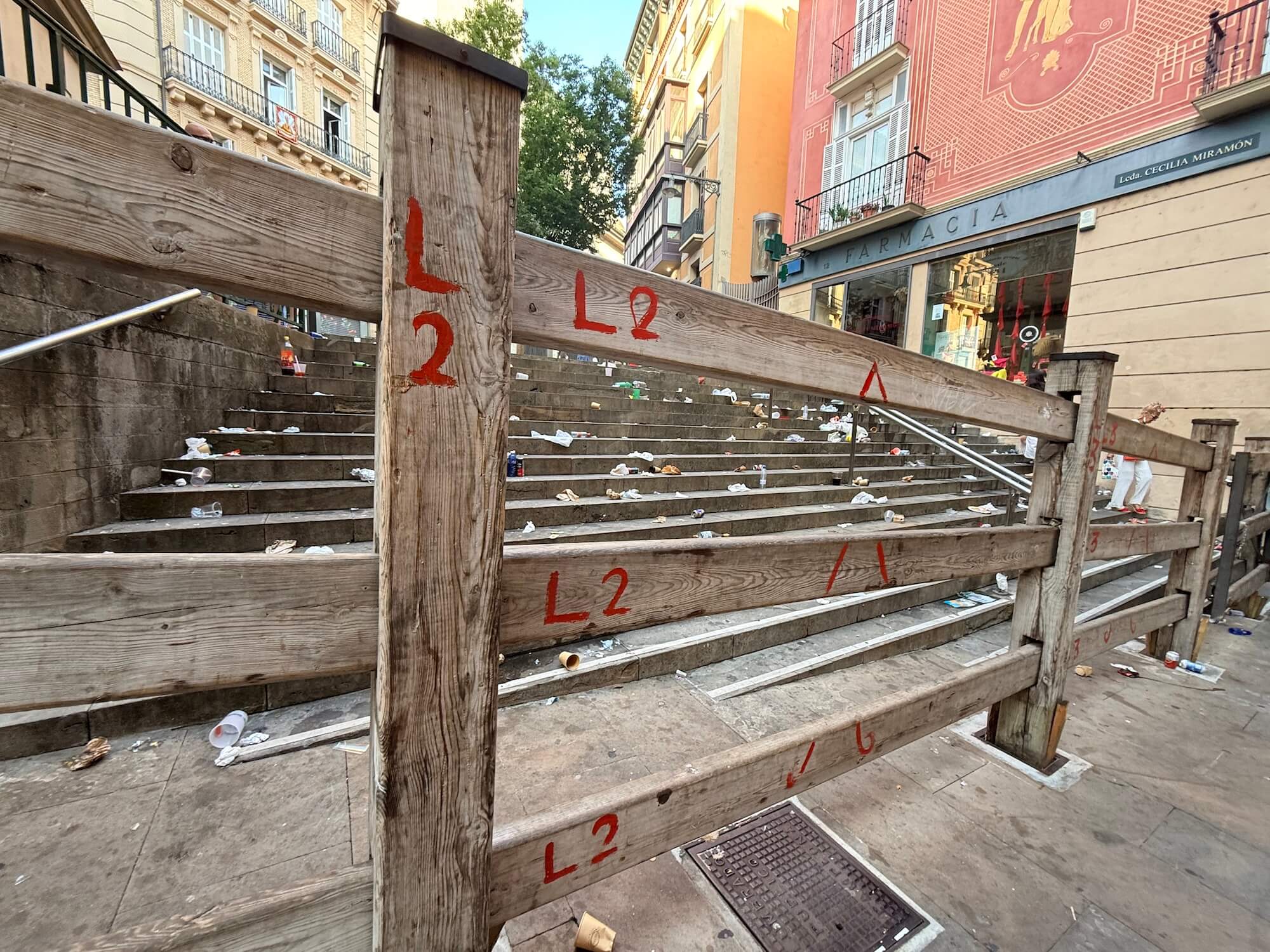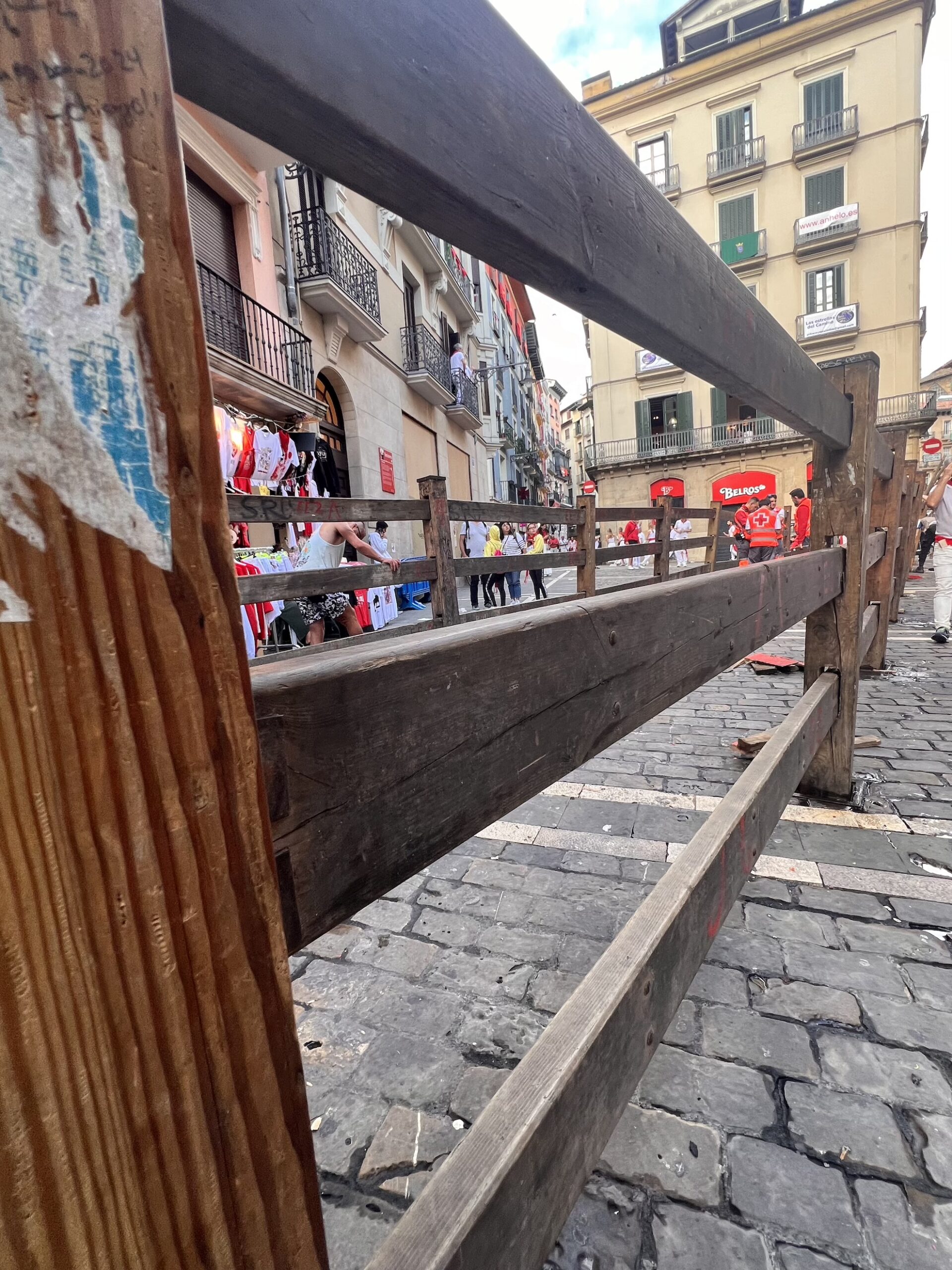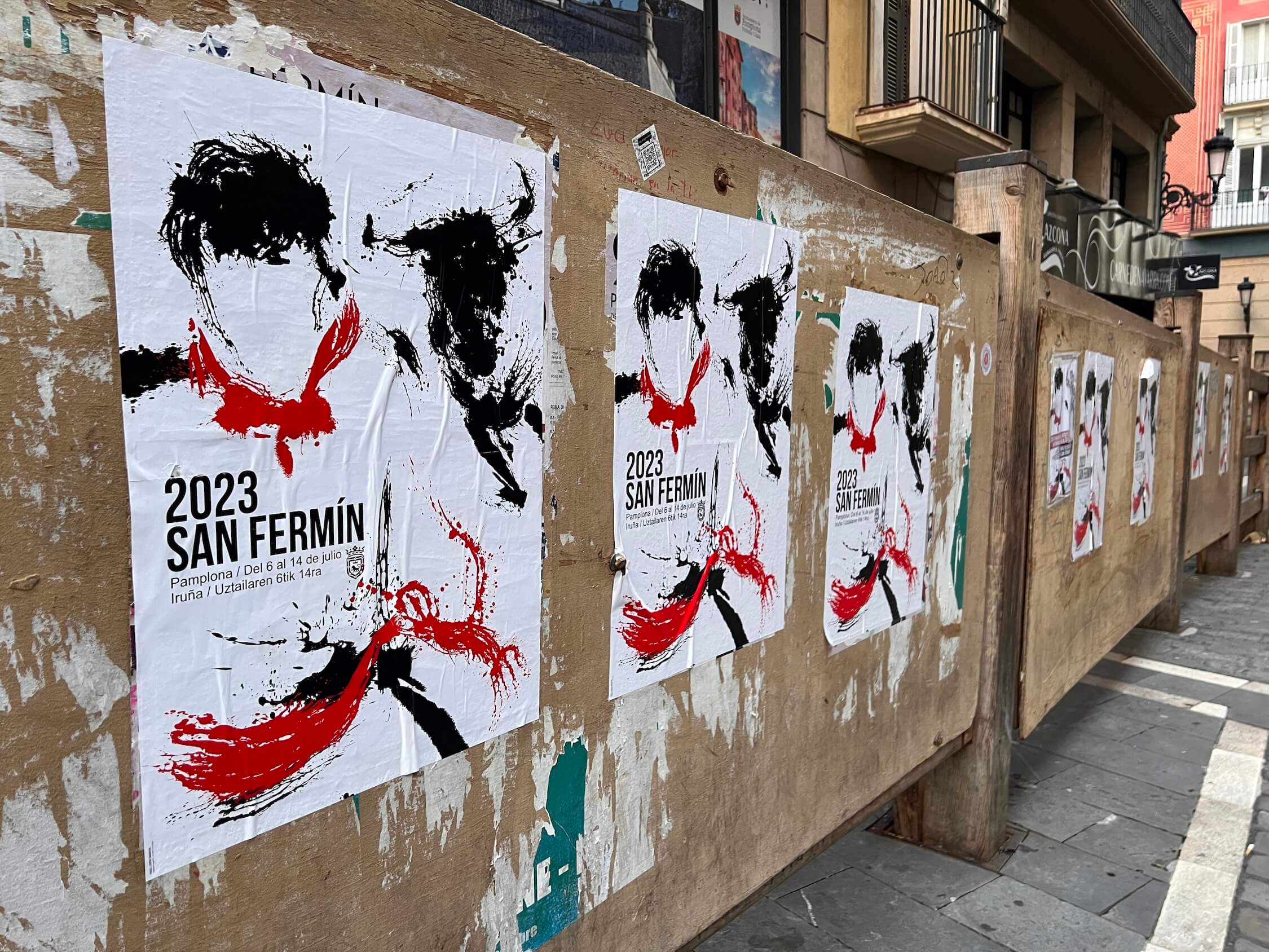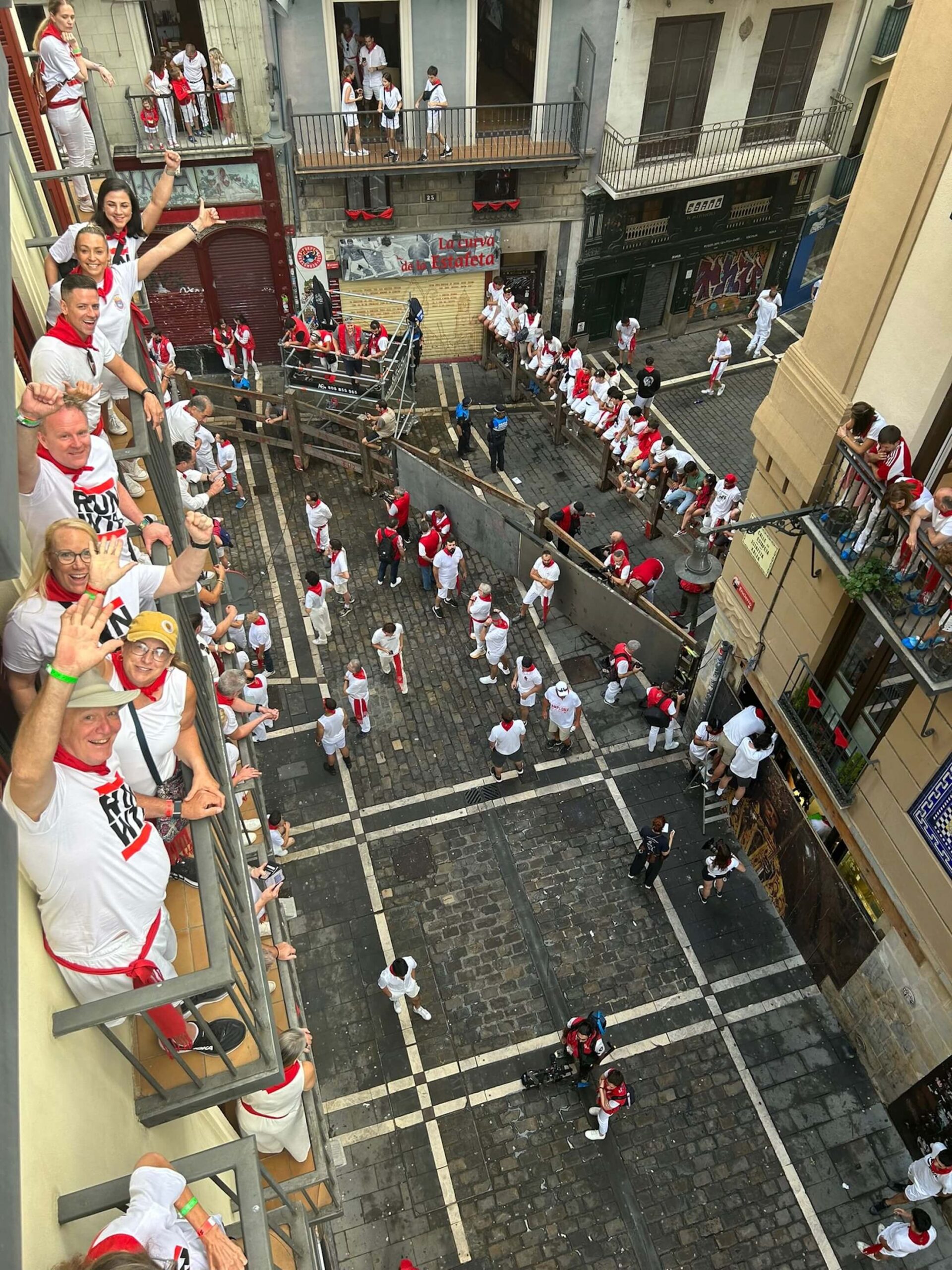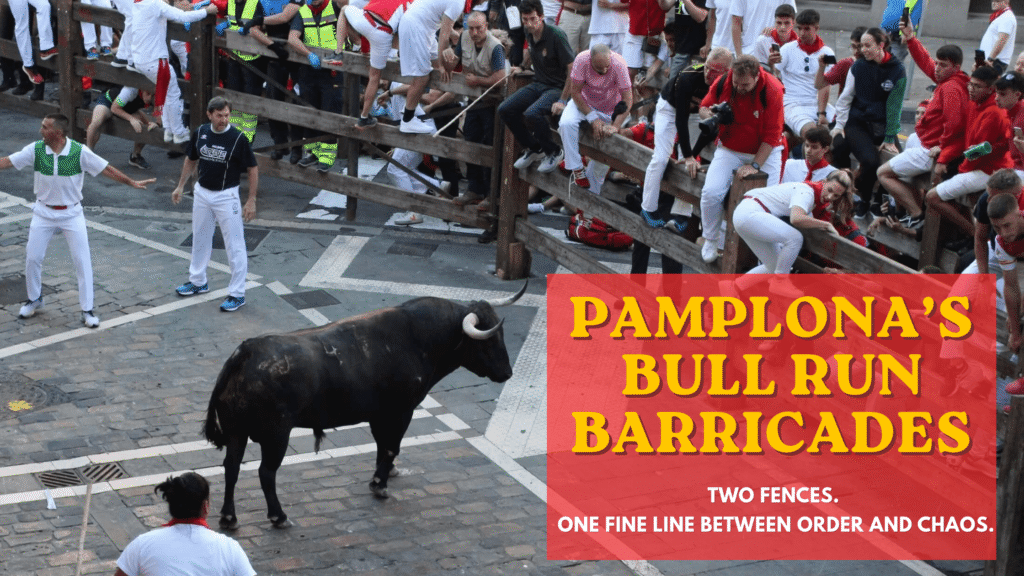
When you watch the Running of the Bulls in Pamplona, you will naturally be focused on the 1,000lb bulls racing through the narrow streets. But the real unsung heroes keeping the entire event from spiraling into total chaos are the thick wooden barricades lining the route.
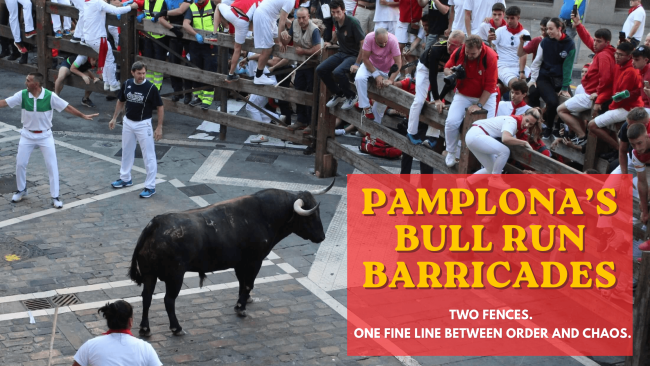
Pamplona’s Bull Run Barricades
Two fences. One fine line between order and chaos.
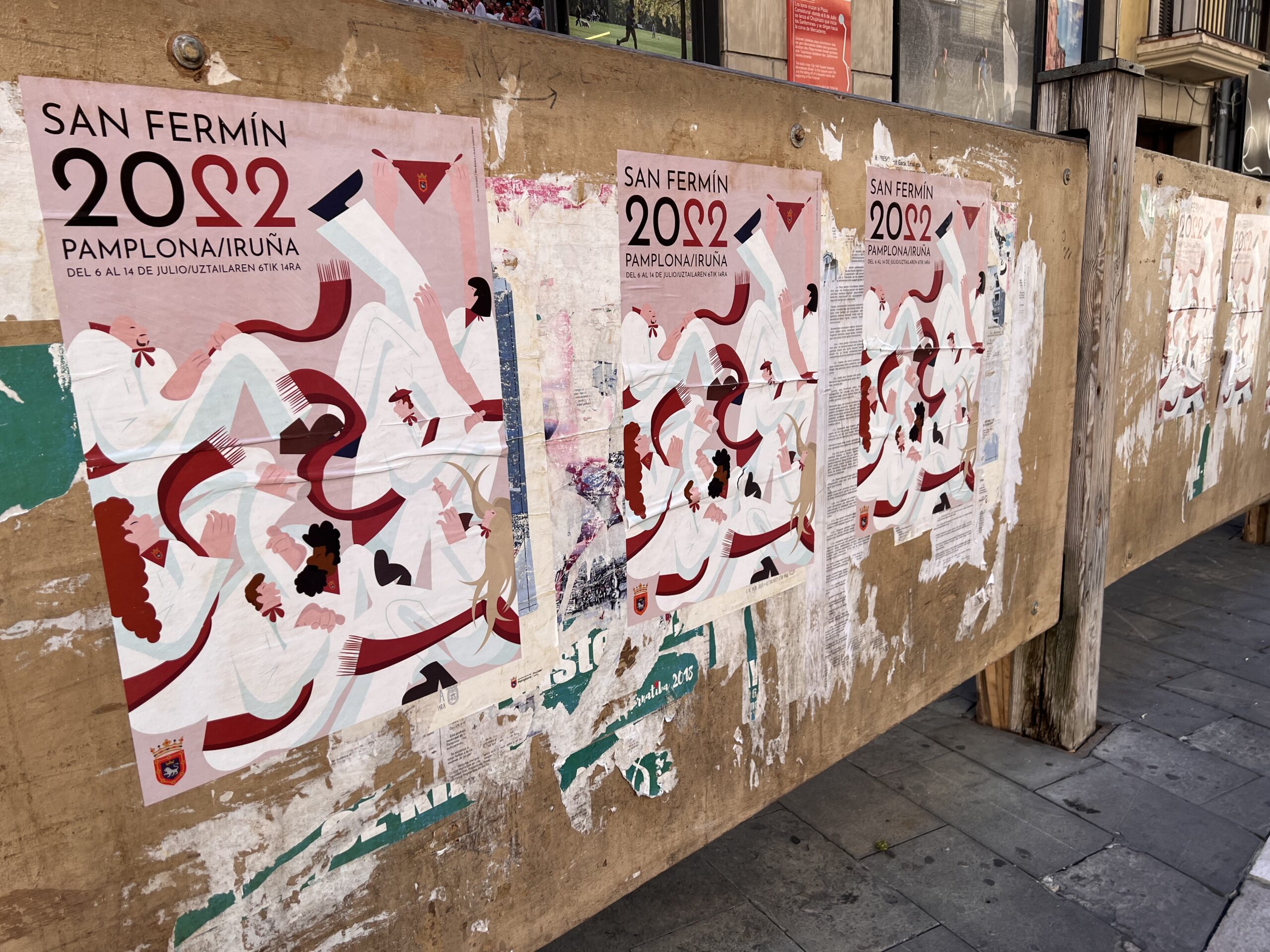
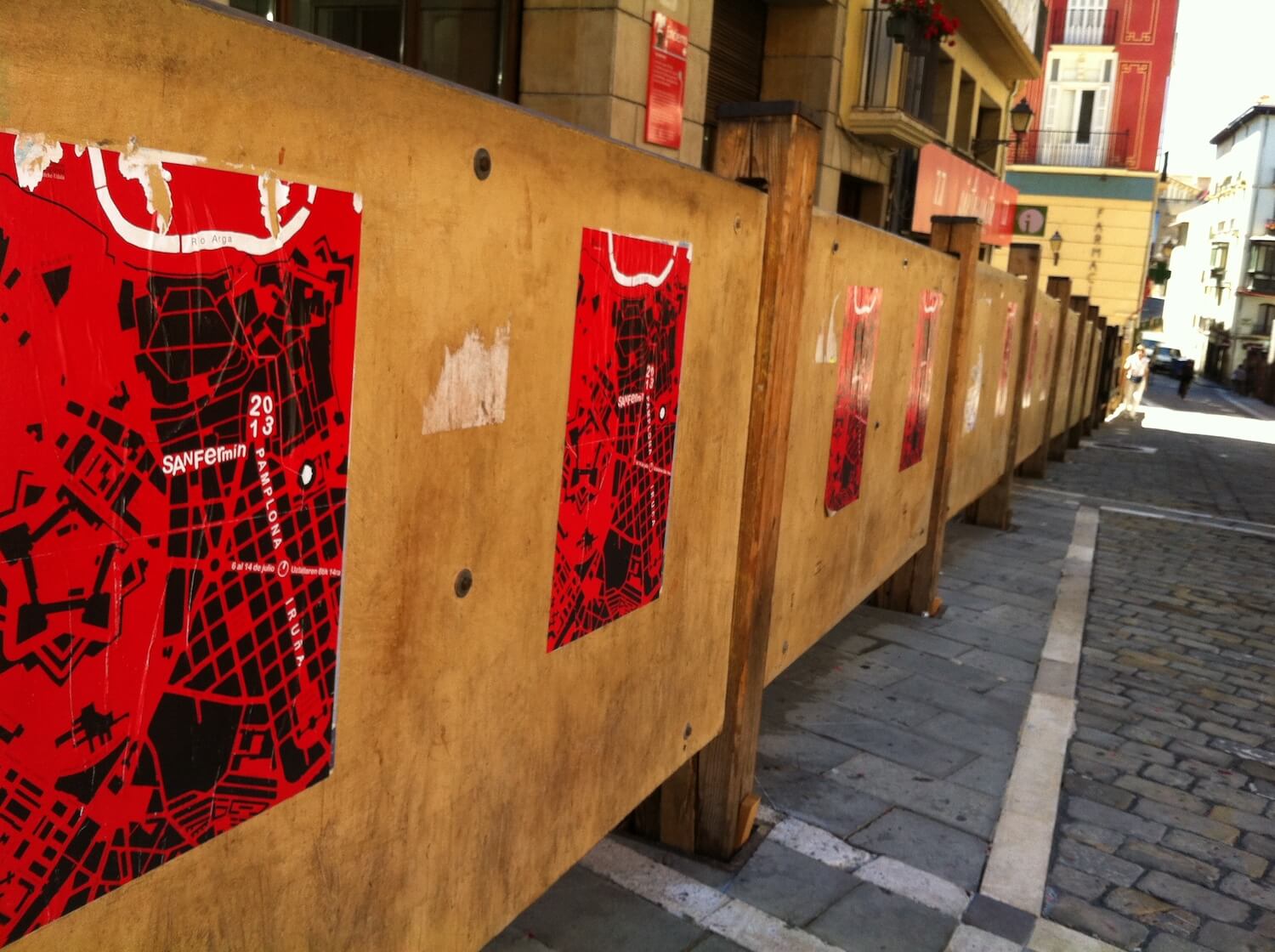
When you watch the Running of the Bulls in Pamplona, your eyes go straight to the bulls. Look down the street before the 8 a.m. start, though, and you’ll see what makes the route possible: heavy wooden posts and planks closing off side streets, reinforced gates ready to swing shut, and, in some places, a second fence behind the first.
Pamplona’s Running of the Bulls barricades, known locally as the vallado del encierro, help keep the herd on course from the Santo Domingo corrals to the bullring. They also control where spectators can stand and give authorized crews room to work. The route is just under 850 meters, or about half a mile, through Pamplona’s old town. Buildings form much of the boundary, so crews install fencing where the course opens onto side streets and other gaps. Pamplona’s guide to the barricade installation
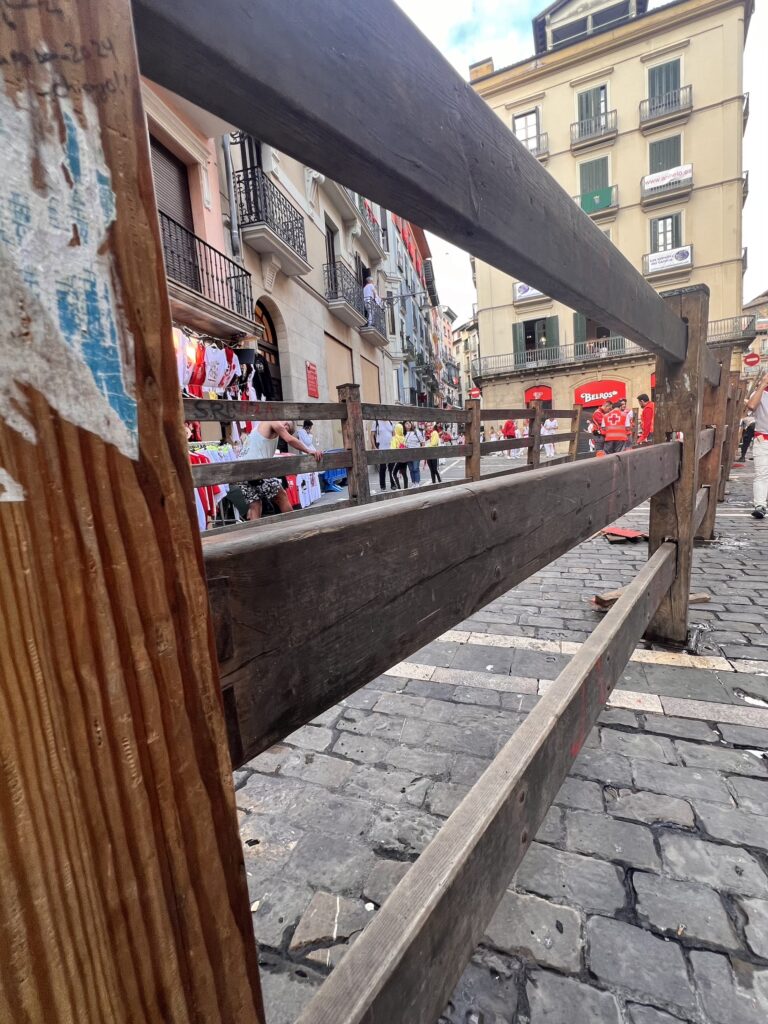
Why does the Running of the Bulls have two fences?
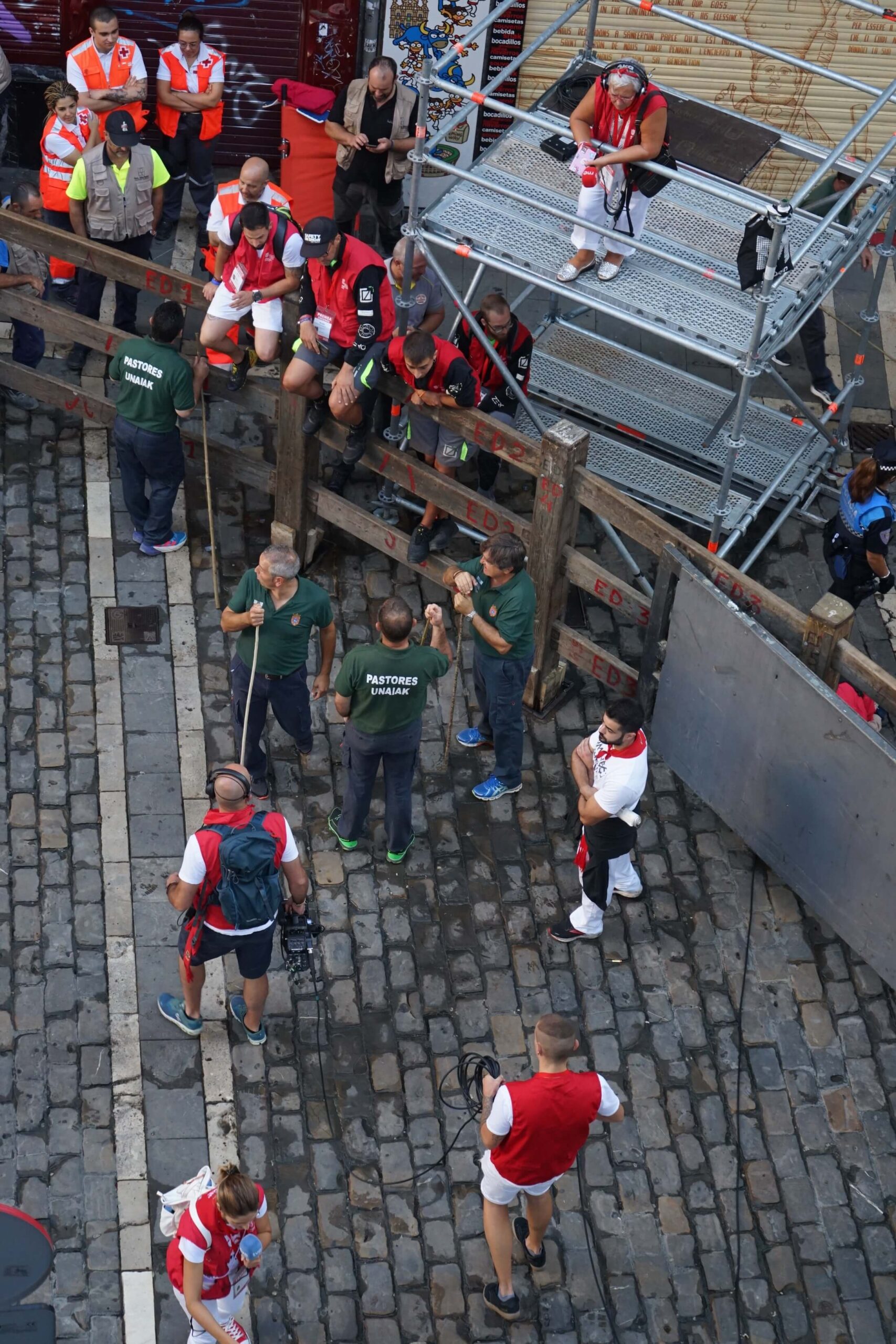
The inner fence marks the edge of the bull run route. The outer fence sets the spectator boundary. Where there’s a double barricade, the gap between the fences is reserved for people authorized by the city, including emergency and security personnel. From street level, watch from the public side of the outer fence where viewing is permitted and follow police directions. Pamplona’s official Running of the Bulls rules
From carts and blankets to Pamplona’s double barricades
Before Pamplona had an official wooden fence, people closed off side streets with carts and even blankets. Bulls sometimes got through, and in 1776 the city council ordered wooden barricades for the route.
The second fence came much later. On July 8, 1939, a bull named Liebrero broke through the single fence and seriously injured a spectator. Pamplona introduced the double barricade in 1941, adding a buffer between the run and the crowd. History of the San Fermín bull run fencing
How Pamplona builds the bull run barricades
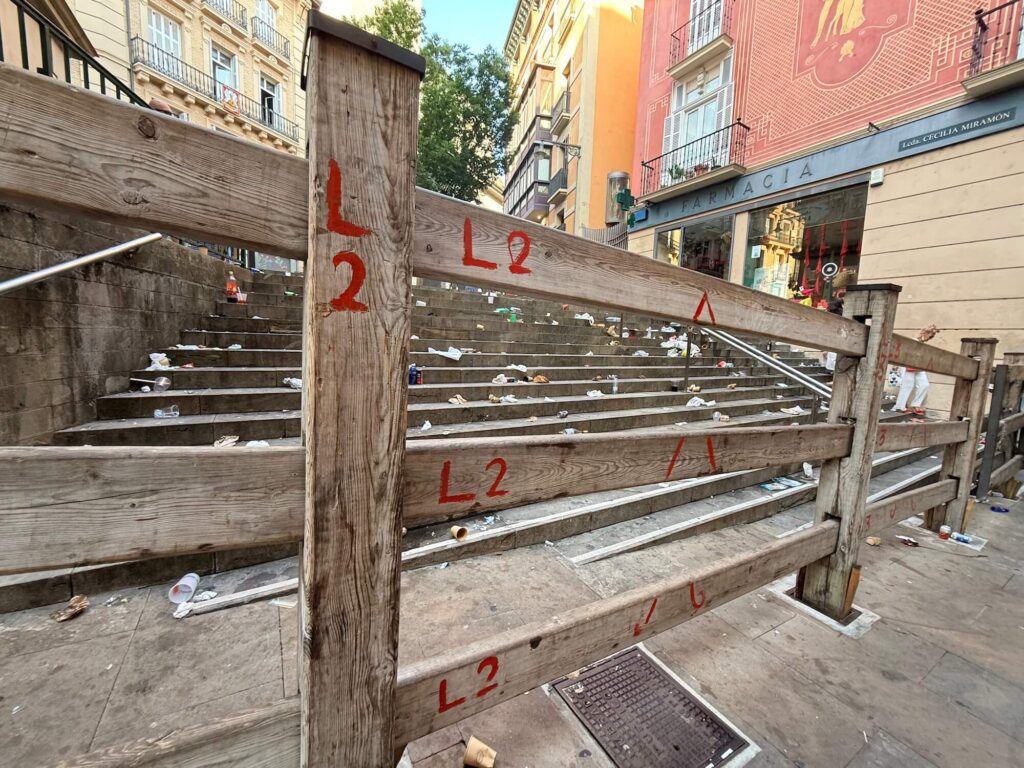
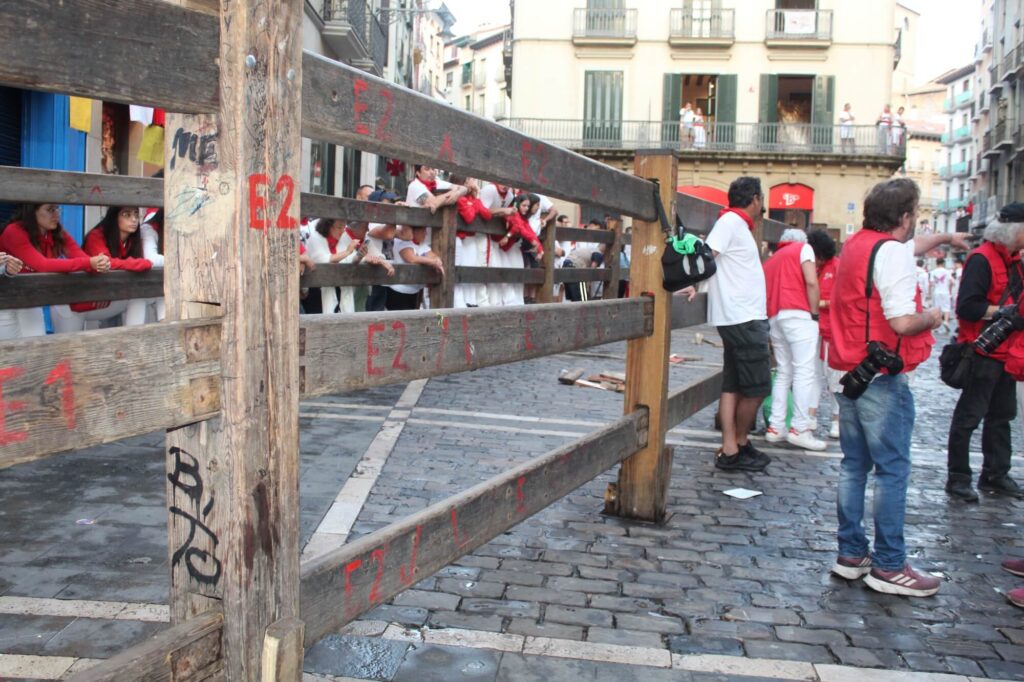
Think of it as a city-sized puzzle with about 900 posts and 2,700 planks. The posts and planks are marked with letters and numbers so crews know where each belongs. The posts fit into sockets roughly 40 centimeters deep, and metal plates reinforce the wood. The city says it replaces about 2% of the wooden pieces each year as they wear out or are damaged. Pamplona’s installation report · Barricade construction and history
Watch for the gates, too. Some give emergency crews access to the route. Others close behind the herd to help prevent bulls from doubling back. How the city assembles the double fence
A Highly Engineered Puzzle
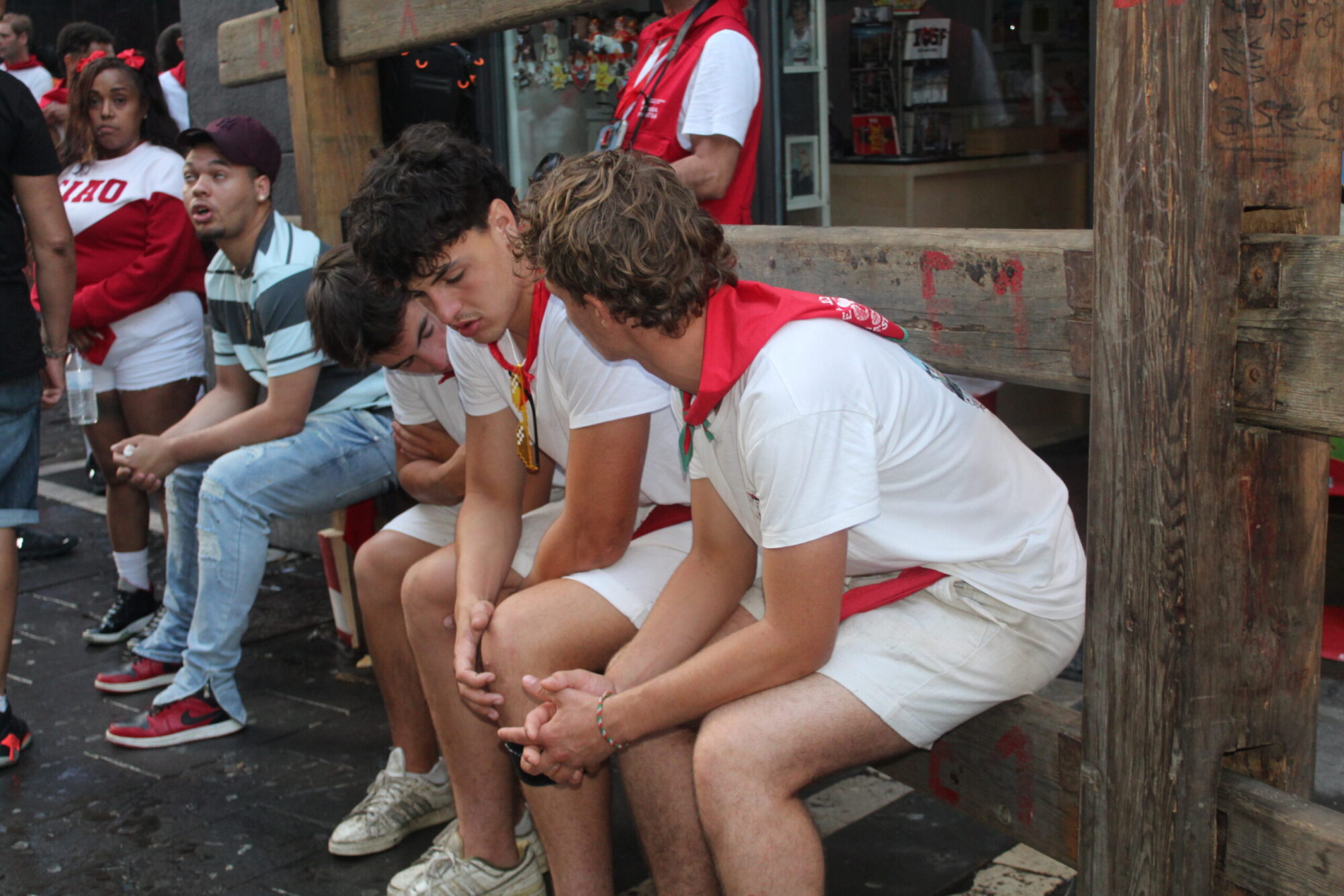
Pamplona’s Running of the Bulls barricades go up wherever the buildings and walls that line the route give way to an open stretch or a side street. From the sidewalk, they look like simple wooden fences. Putting them together is more like assembling a 13,000-piece LEGO set across an entire neighborhood.
Every piece has a place. The barricades use around 900 vertical posts and 2,700 horizontal planks, plus thousands of screws, wedges, and other fittings. A code of letters and numbers tells the crew exactly where each post and plank belongs. A beam fitted to the corner of Mercaderes goes back to that same corner every July.
The posts go deep into the street. The carpenters set the uprights into steel-lined sockets about 40 centimeters deep in the pavement. The timber comes from the Pyrenean valleys of Navarre and is mostly pine, though some of the oldest elm pieces are more than a century old. Steel plates reinforce the backs of the timbers, giving the fence the strength to absorb the impact of a charging bull weighing up to 1,300 pounds while still allowing the wood to flex.
The two fences serve different purposes. Where the route has a double barricade, the inner fence marks the edge of the course and spectators watch from behind the outer one. The gap is kept clear for authorized personnel, including police and emergency medical teams. The horizontal rails give runners a way to get out of the bulls’ path at those points, while the space between the fences gives medics room to reach someone who’s injured.
Most of the fencing comes down after each run. About 40 carpenters get the barricades ready in late June. Roughly 40% stays anchored throughout San Fermín. The crew puts up the other 60% before each morning’s run and takes it down afterward so people and traffic can move through the city again.
Twelve gates close behind the herd. As the bulls pass, the gates swing shut to keep the herd from doubling back. Between runs, the gates stay mounted and fold back against the walls, where you can spot them as you walk the route.
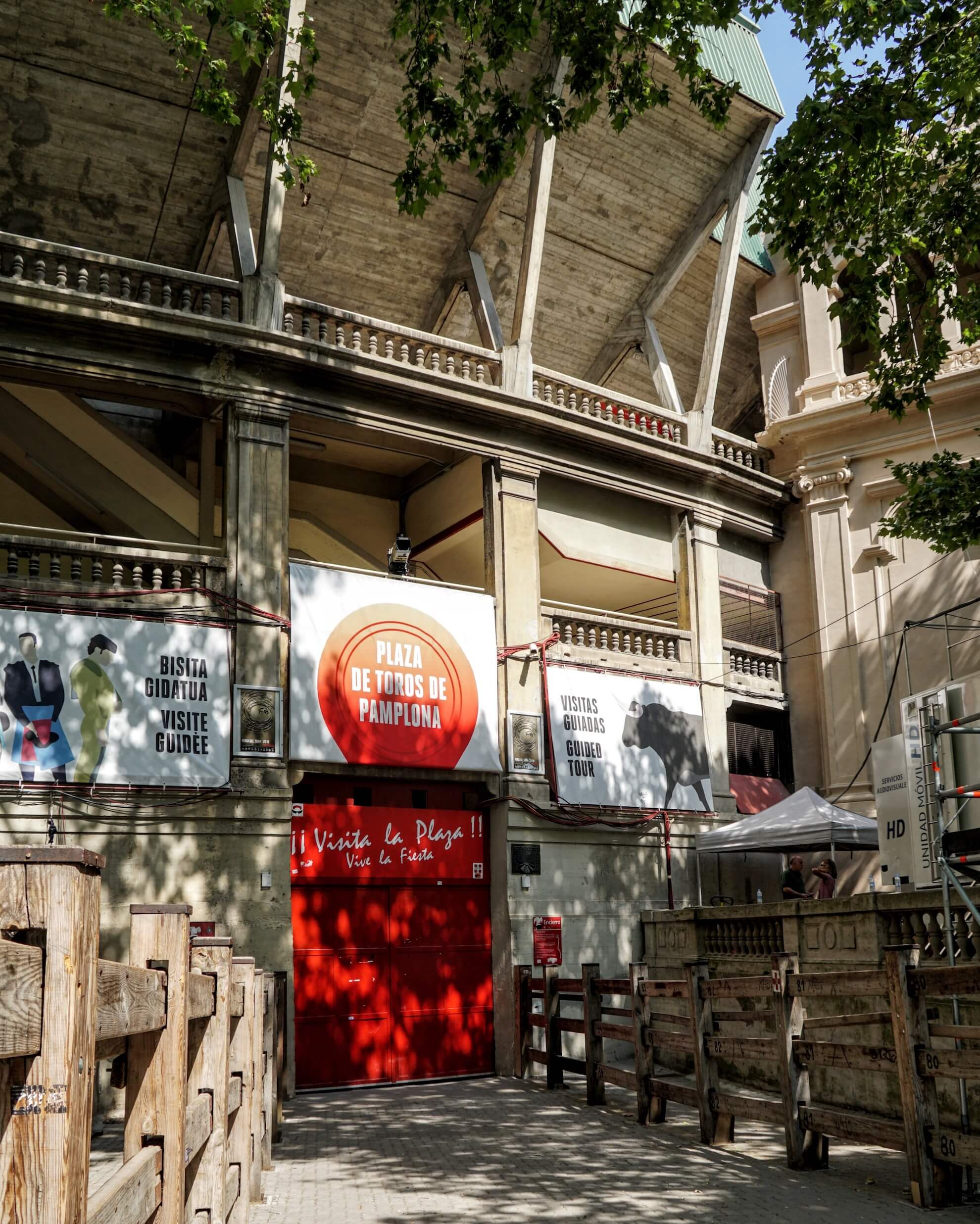
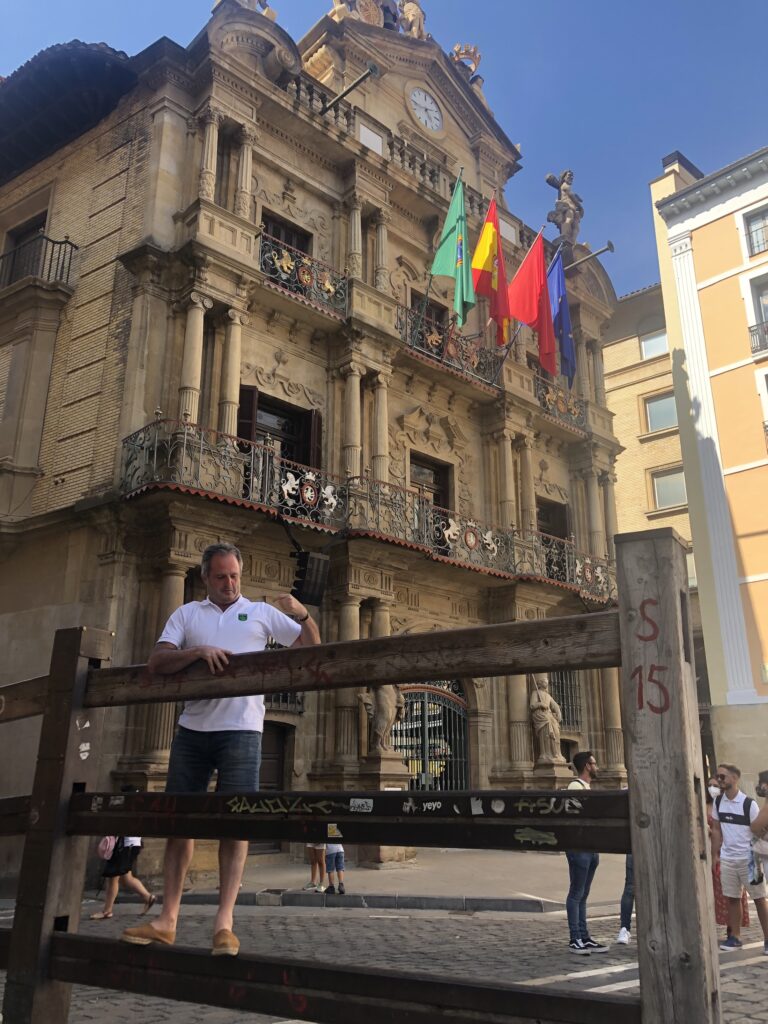
If you visit Pamplona outside San Fermín, you can still see two sections of the wooden barricades up close. One is at the bullring entrance. The other is in front of City Hall, behind the tourist office.
The Disappearing Act on July 14th
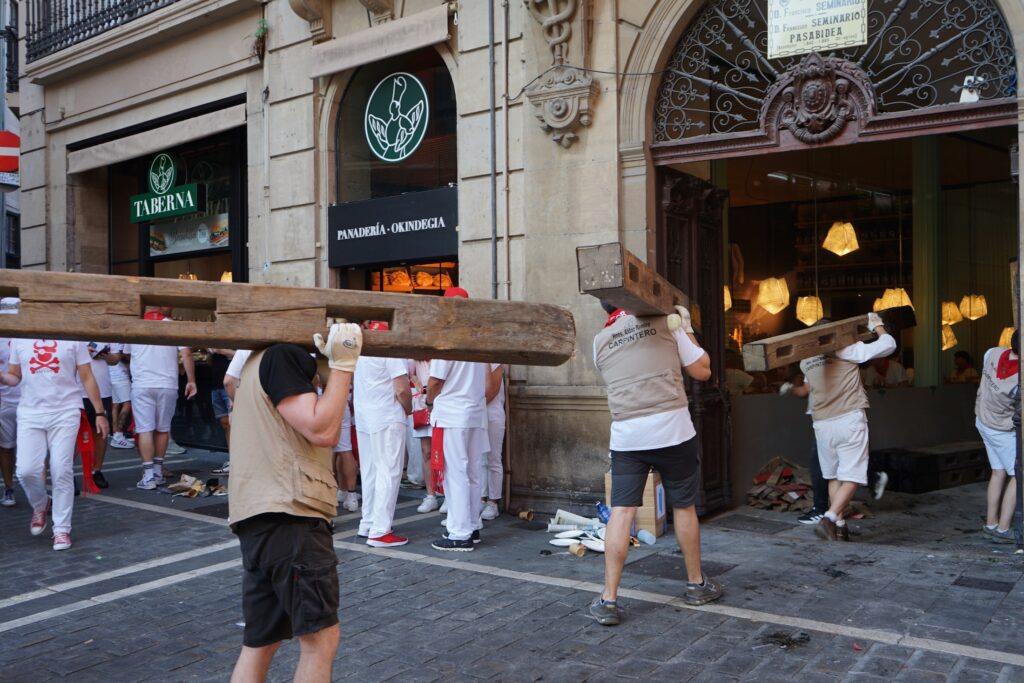
During festival week, crews assemble and take down movable sections of the fence every morning before and after the 8:00 AM run so daily foot traffic can flow.
Then comes July 14th—the eighth and final bull run of the San Fermín festival.
The second the last bull crosses the arena threshold that morning, the carpenter crews immediately enter the course with wrenches, pry bars, and flatbed trucks. While festival-goers are still feeling the adrenaline from the last run wear off, crews dismantle all 13,000 components of the barricades.
The posts are pulled, the street anchor holes are resealed, and every numbered plank is loaded up and trucked off to city warehouses until the following summer. By the next morning, Estafeta and the surrounding avenues look like any normal historic Spanish street leaving behind no visible trace of the danger that roared through just hours before.
After the final run on July 14, the full barricade system comes down and the pieces go back into storage at the Corrales del Gas until the following festival. Pamplona’s installation report · San Fermín festival guide
Where can you watch the Running of the Bulls in Pamplona?
From behind the barricades. Get there early if you want a street-level spot. Your view depends on where you stand, how many people are ahead of you, and how much of the course you can see from that opening.
From a balcony. A balcony overlooking the route gives you a view down the street and lets you see the herd approach. If you’re choosing a spot, look at which stretch you’ll see. Along Estafeta, for example, the bulls come out of the turn from Mercaderes and head up one of the longest straight sections of the route. Explore the Pamplona bull run route.
From inside the bullring. The Plaza de Toros is where you can watch the bulls and runners arrive at the end of the course. Pamplona’s spectator guide.
Want to watch from above the route? Explore Bucket List Events’ Running of the Bulls balcony options.